Lamisa Mahmud
Cry to Allah (SWT) for repentance and comfort. Cry during prayer. Cry when listening to recitations. Cry because no one will understand you and listen better than Him. After all, “nothing is dearer to Allah than a teardrop” (Sahih al-Tirmidh Hadith Collection). How could something as small as a teardrop hold so much significance, though? The act of crying highlights the heart-mind connection believers experience when they reveal themselves to Allah in a vulnerable state because Allah will heal you more than anything else in this dunya can.
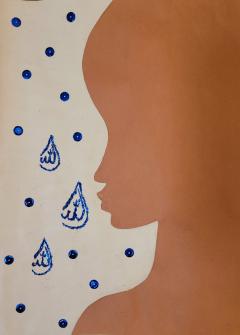
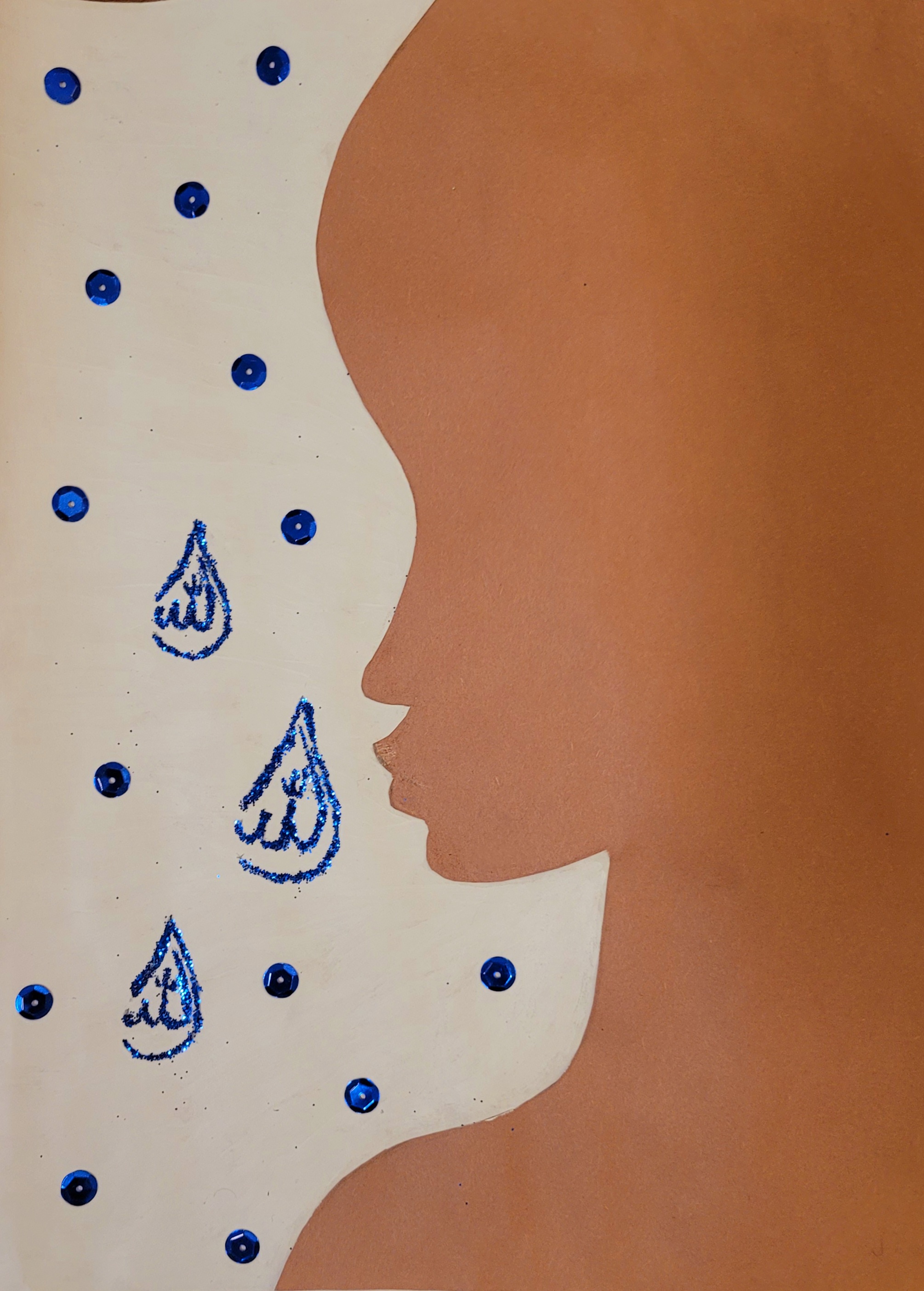
In this design, I illustrate tears falling from the eyes of a follower of Islam, with “Allah” embedded into the tears. The tears represent the soul’s desire to reach out to Allah during times of despair to receive comfort and/or forgiveness. Moreover, the blue dots represent the beads of a tasbih, which Muslims use during rituals of prayer or to worship Allah. Blue symbolizes tranquility and mercy, so the said color is emphasized throughout the design to illustrate the merciful, healing nature of Allah. Lastly, the purpose of adding glitter to the tears and displaying the silhouette of the follower without any apparent features is to highlight the tears as the central component of the design.
Depending on the individual, tears can reflect a myriad of feelings, such as pain, regret, and even joy and gratitude. Essentially, crying is a private, emotional act that serves as meaningful communication between a believer and Allah without the mention of any words. The comfort it provides to the follower is the reassurance that Allah understands everything you’re feeling and is always by your side, strengthening your connection with Him. Thus, let the flow of tears soften your heart and guide you to Allah, the one and only healer and forgiver.