Ada Vazzana
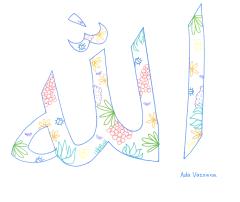
There are two concepts of God in Islam that I chose to represent in my calligram. The first that I picked was the oneness of God, called “tawhid” in Arabic. I wished to show through my design that God can be conveyed through anything and everything. I decided that the best way to show this would be through drawings of nature, broadly. Nature encompasses the very foundation of our Earth and therefore what God has intended for people to see. The second concept that I worked with was God’s beauty and appreciation of beauty. There is a verse in the hadiths that says “Allah is beautiful and loves beauty.” This relates to the last concept because nature, which both contains God and is a product of God, is a representation of beauty.
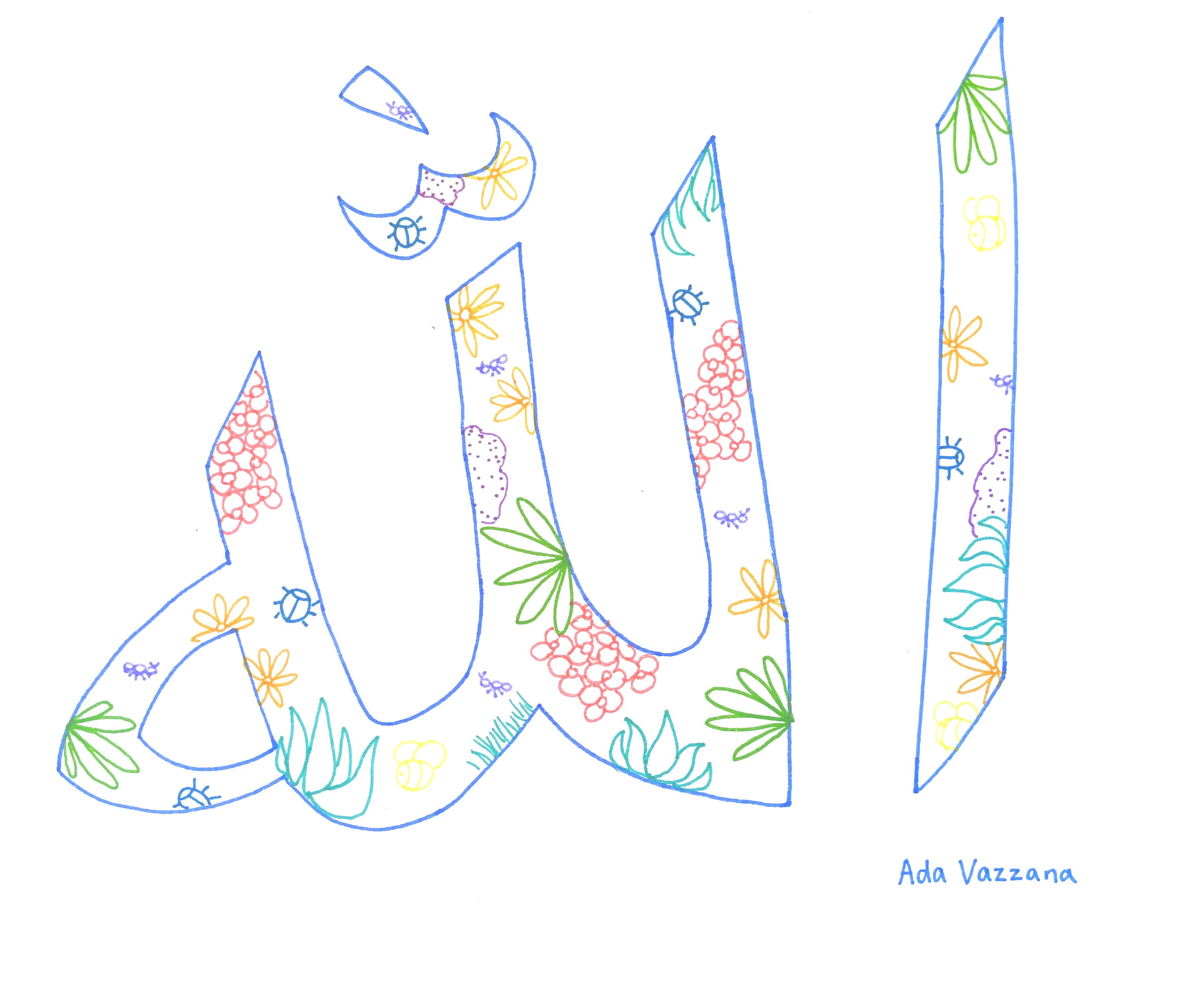
The medium that I chose for my design was fine-point colored markers. They have vibrant colors to show the aesthetic of the flora and fauna of the design, yet are easy to work with to get smooth, crisp lines. First, I planned the design in pencil with an outline of the Arabic for “Allah,” including a large amount of space within the lettering. Then, I filled the blank part of the script with a brilliant array of plants and animals. After I created this pencil draft, I slowly worked my way back through the initial setup, erasing and replacing the lines with a marker. I believe that it worked to get the desired effect for the design, which is simplicity, beauty, and cohesiveness.
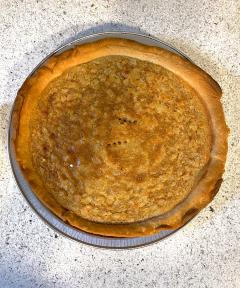
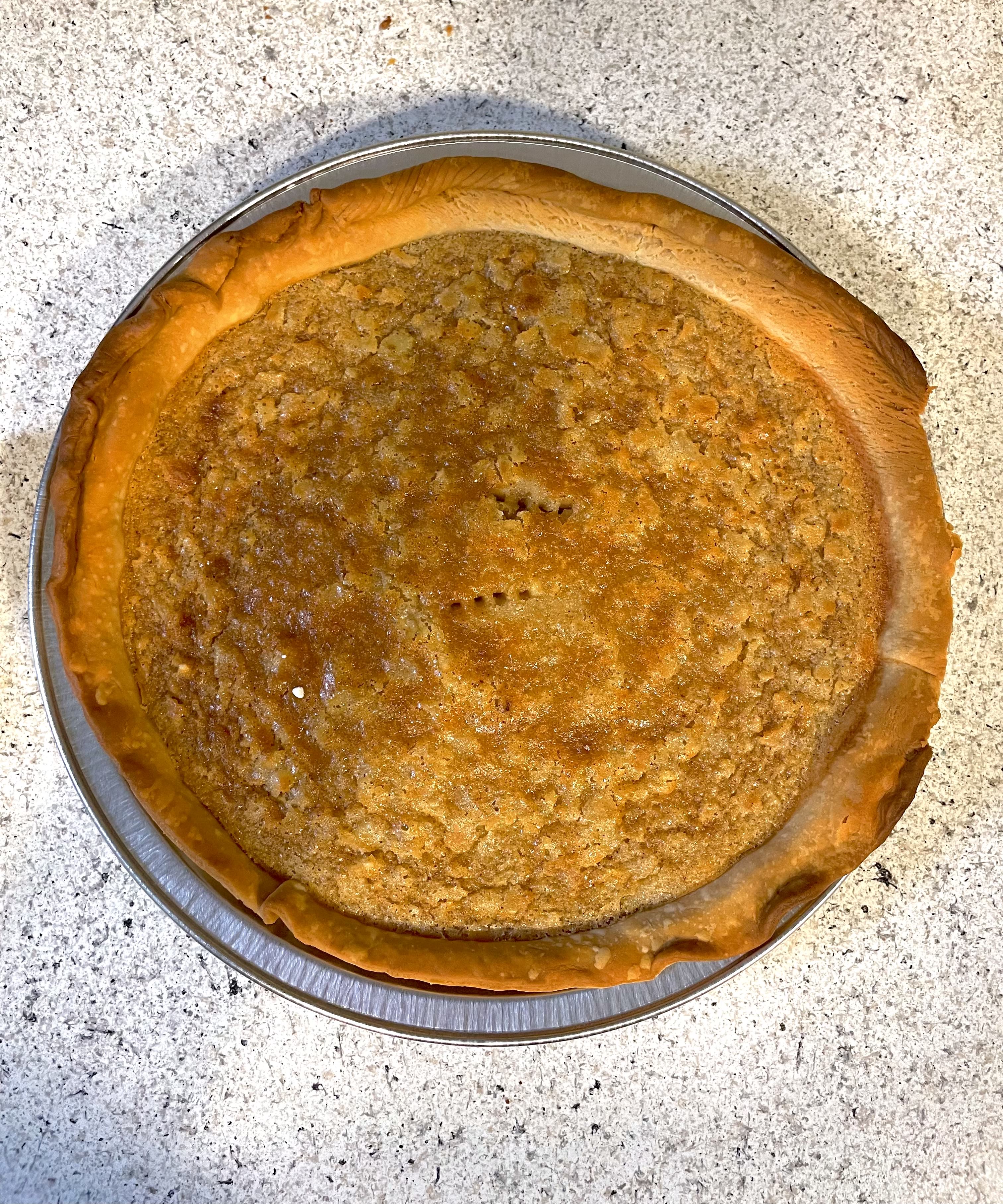
For this part, I got my creative juices flowing by leaning into my personal skillset: cuisine. Baking is one of my favorite things to do, and I am glad that we were given this option. I used the “No-Fail Bean Pie” recipe from AllRecipes as it seemed to get many good reviews (5). I halved the ingredients because the recipe makes two pies, and I only need one; I would not like to waste any ingredients. Because I don’t have a food processor in my dorm, I had to mash the beans by hand. Perhaps this is closer to the “true” experience of making bean pies, as I am sure that homes did not typically have food processors in the nineteenth century. I read in the reviews (5) that the pie tastes akin to pumpkin pie, and I would agree with this assessment. On the other hand, the bean pie lacks the squashy undertones of a pumpkin pie, so, in my opinion, bean pie actually tastes better. While I may never fully understand the cultural significance of bean pies, I can certainly understand their deliciousness, and I will attempt to explain their history in the following paragraph.
The origin of bean pie comes from before the Civil War by a man of possible Native American origin named Fash. He was the first recorded person to make and sell bean pies, pies so popular that miners “fought over” (6) them. The Nation of Islam, the same group I mentioned earlier, took great interest in navy beans grown near Chicago and Michigan. The navy bean was grown abundantly there due to the land’s fertile growing conditions. Leader of the organization Elijah Muhammad emphasized a healthy diet based in beans. Beans were essentially revered by The Nation due to their low caloric density and plentiful nutrients. Elijah Muhammad considered the navy bean to be one of Allah’s prime creations, “holy” and “biblical” (6). In addition, the beans were cheap, which allowed them to reach even more popularity, especially during the time of The Great Depression. The encouragement of a healthy lifestyle opened up The Nation of Islam to newcomers and encouraged the mainstream perception of the group. The bean pie reached its peak with Nation chef, Lana Shabazz, who worked for the famous boxer, Muhammad Ali. Overall, the bean pie was a crucial culinary element in the formative years of The Nation of Islam, and continues to be a part of the black Muslim subculture in The United States. This write-up, however, only scratches the surface of the significance of the bean pie to The Nation of Islam, and there is much more than this mere summary contained in the thesis I have linked in my citations.