Lamisa Mahmud
Calligram Project
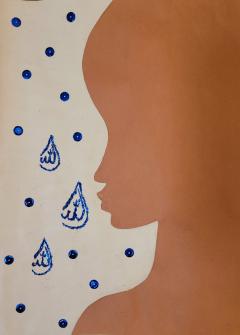
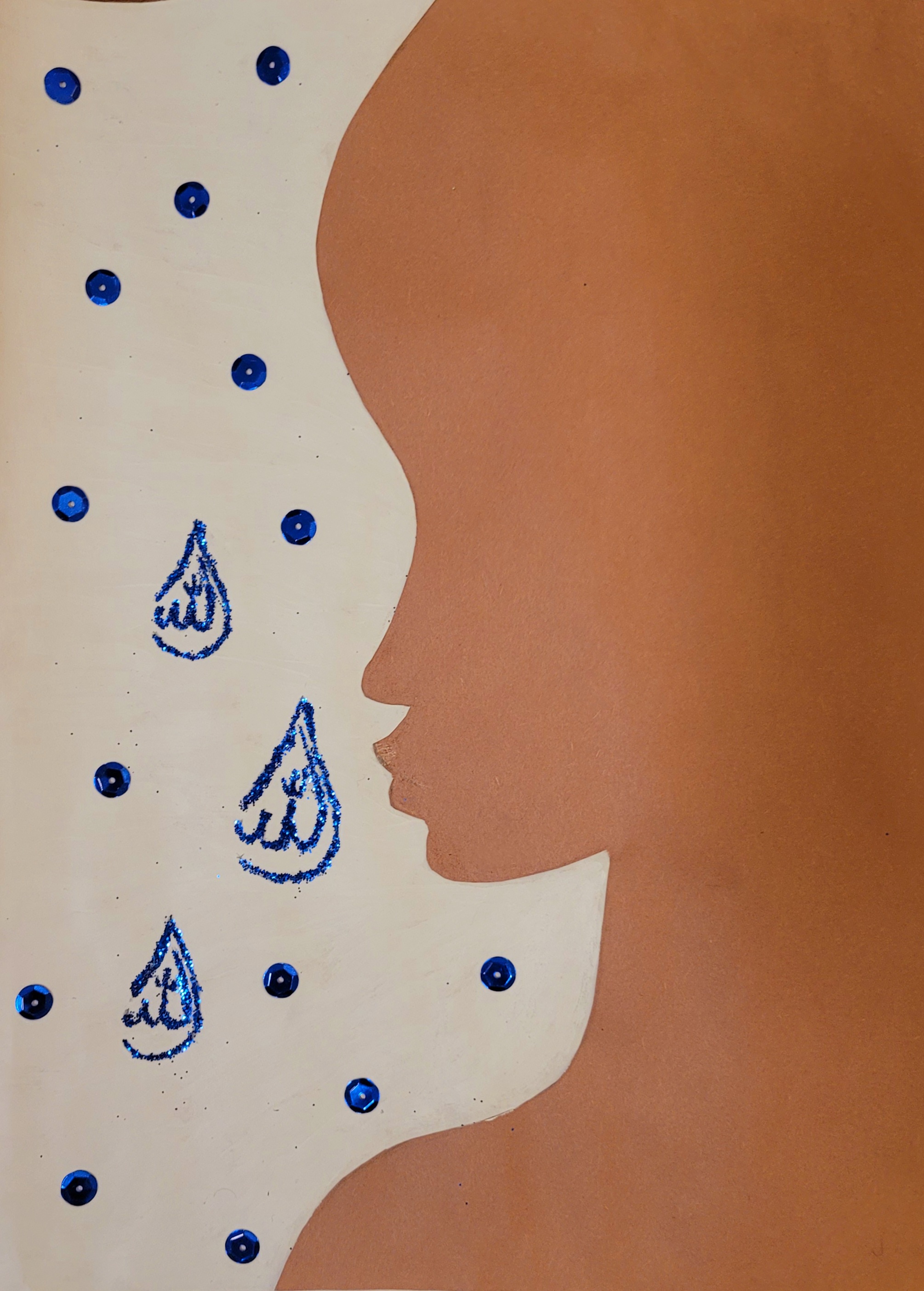
Cry to Allah (SWT) for repentance and comfort. Cry during prayer. Cry when listening to recitations. Cry because no one will understand you and listen better than Him. After all, “nothing is dearer to Allah than a teardrop” (Sahih al-Tirmidh Hadith Collection). How could something as small as a teardrop hold so much significance, though? The act of crying highlights the heart-mind connection believers experience when they reveal themselves to Allah in a vulnerable state because Allah will heal you more than anything else in this dunya can.
In this design, I illustrate tears falling from the eyes of a follower of Islam, with “Allah” embedded into the tears. The tears represent the soul’s desire to reach out to Allah during times of despair to receive comfort and/or forgiveness. Moreover, the blue dots represent the beads of a tasbih, which Muslims use during rituals of prayer or to worship Allah. Blue symbolizes tranquility and mercy, so the said color is emphasized throughout the design to illustrate the merciful, healing nature of Allah. Lastly, the purpose of adding glitter to the tears and displaying the silhouette of the follower without any apparent features is to highlight the tears as the central component of the design.
Depending on the individual, tears can reflect a myriad of feelings, such as pain, regret, and even joy and gratitude. Essentially, crying is a private, emotional act that serves as meaningful communication between a believer and Allah without the mention of any words. The comfort it provides to the follower is the reassurance that Allah understands everything you’re feeling and is always by your side, strengthening your connection with Him. Thus, let the flow of tears soften your heart and guide you to Allah, the one and only healer and forgiver.
Final Paper Creative Aspect
Section B: I chose to create a website. Here is the link to it: https://lmahmud9.wixsite.com/divine-aesthetic.
Section C:
I chose to create a website (the medium) because I felt that it would portray my message/the concept the best. Since many Muslims and non-Muslims may not know about the origins of the Quran, they can learn more about it through this website that has various features and promotes community. On this website, they can also ask questions and interact with others through the forum, attend events related to this topic, and engage with blog posts. This promotes diversity of thoughts and knowledge being exchanged, allowing for others to learn from each other and connect with them. I also included some other information about Islam on the website, such as the prayer times and the explanation behind “Assalaamalaikum” in one my blog posts. This is to make the website appear more realistic and educational about Islam in general.
The venue is the internet and social media. Since I created a website, it would appear on the internet after a Google search, for example, or on social media where it can be promoted. The website can easily be shared digitally through sharing the link to it. In other words, it’s convenient and easy for others to access, another reason I chose this venue and a website for my creative aspect.
My audience is internet users, and I focused on them because many people search up information whenever they’re curious about something. This has its pros and cons as information is easily accessible, but it can also be easy to spread misinformation. Thus, this website condenses reliable information about the origins of the Quran into a single place and allows for healthy discussion between online users. It might be overwhelming to just read information, so the website has other in-person events and online interactive resources as well, like a forum.
My website represents the second idea highlighted in section A by organizing different aspects and main ideas about the origins of the Quran into a website that anyone can access. Online users can read about how the Quran was originally introduced as an oral text, how important recitations and its aesthetics are, how different they can sound around the world, and why it’s important to know about these origins in the blog posts. They can reflect on this information in the discussion forum. They can also sign up for one of the in-person or online offered events to learn more about the origins of the Quran through an engaging activity, like attending a seminar or a guest speaker event. Through all these resources on the website, online users can understand why this information is important to know (for everyone). Essentially, this website illustrates how complex and rich the origins of the Quran is and gets online users interested in this topic.