Emma MacKenzie
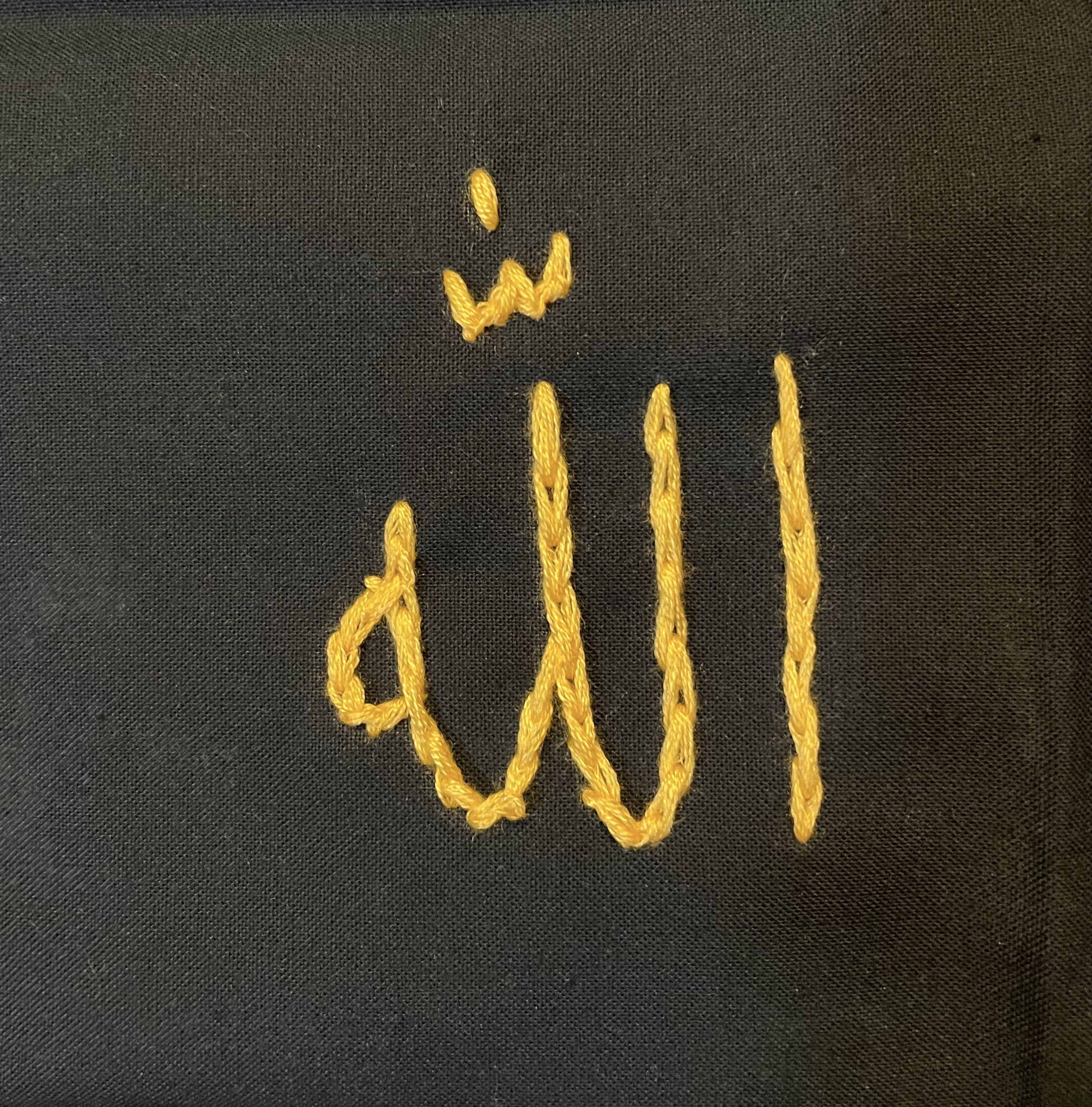
For my calligram, I chose to embroider the word Allah using yellow thread on a dark blue/black cloth. One of the 99 names used to describe Allah in the Quran is “the Fashioner,” and I was interested in exploring the idea of creation through needlework and textiles. Divine creation is a very different scale from human craftsmanship; however, I am interested in how we can think about Allah both being present in all materials – thread, needles, fabric – and also present in the creative process itself, the human act of sewing, or weaving, or embroidering.
In lecture, we learned about the different ways that Quranic scripts were integrated into common objects, such as lamps or water jugs. One such object was clothing, such as cloaks, which reference Quranic verses related to protection (as well as calling upon the Prophet Muhammad’s cloak, which is a key symbol in the Quran and hadith). Another such object was carpets, where verses were stitched into the material on a miniature scale to create beautiful patterns.
To me, embroidery represents the literal weaving of devotion and prayer into everyday life. When made into a physical object, the calligraphy becomes a type of talisman. Sewing can be a devotional act, where the methodology of stitching verses into the fabric is like prayer. But additionally, the robe or carpet that is produced from this labor of love becomes infused with religious significance. By embroidering the word Allah into a piece of cloth, I hoped to show how Allah is not just an abstract, worldly concept; Allah is present everywhere, but especially in domestic spheres. Just as faith can be a form of support, the goal of textiles is also to provide warmth and envelop one in comfort.