Ovid — Tristia
Publius Ovid Naso (40 BC – 17 CE) was born in Sulmo, Italy, at the time of the Roman Republic. He is considered one of the most influential poets of the Western literary canon, particularly for his Tristia, which captured his experience of exile in 8 CE to the Black Sea port town of Tomas, now the Romanian city of Constanta. The cause of Ovid’s exile is contested, with the poet himself citing “carmen et error”: “a poem and a mistake.” His writing, however, has remained influential – particularly as “exile,” according to Peter Green (translator of a 2005 edition of Tristia), “has once more become, as it was in Augustus’ day, if not a universal condition, at least an all-too-familiar risk.”
Excerpt:
'You gods of sea and sky' — what's left me now but prayer? —
'Don't break up our storm-tossed ship:
don't, I beseech you, endorse great Caesar's fury!' Often
when one god's hostile another will bring help:
Hephaestus stood against Troy, on Troy's behalf Apollo;
Venus was pro-Trojan, Athena pro-Greek,
Juno hated Aeneas, had more sympathy for Turnus —
Yet because of Venus' power Aeneas stayed safe.
Time and again Poseidon made savage assaults on prudent
Odysseus; time and again
Athena deflected her uncle's wrath. Though I lack such heroic
stature, who says I can't get heavenly aid
when a god's angry with me? But my words are all wasted
spindrift stings my lips as I speak, the waves
tower up, these fearful storm-winds scatter my message,
stop my prayers reaching the gods
to whom they're addressed, and (to cause me double trouble)
are driving both sails and entreaties heaven knows where.
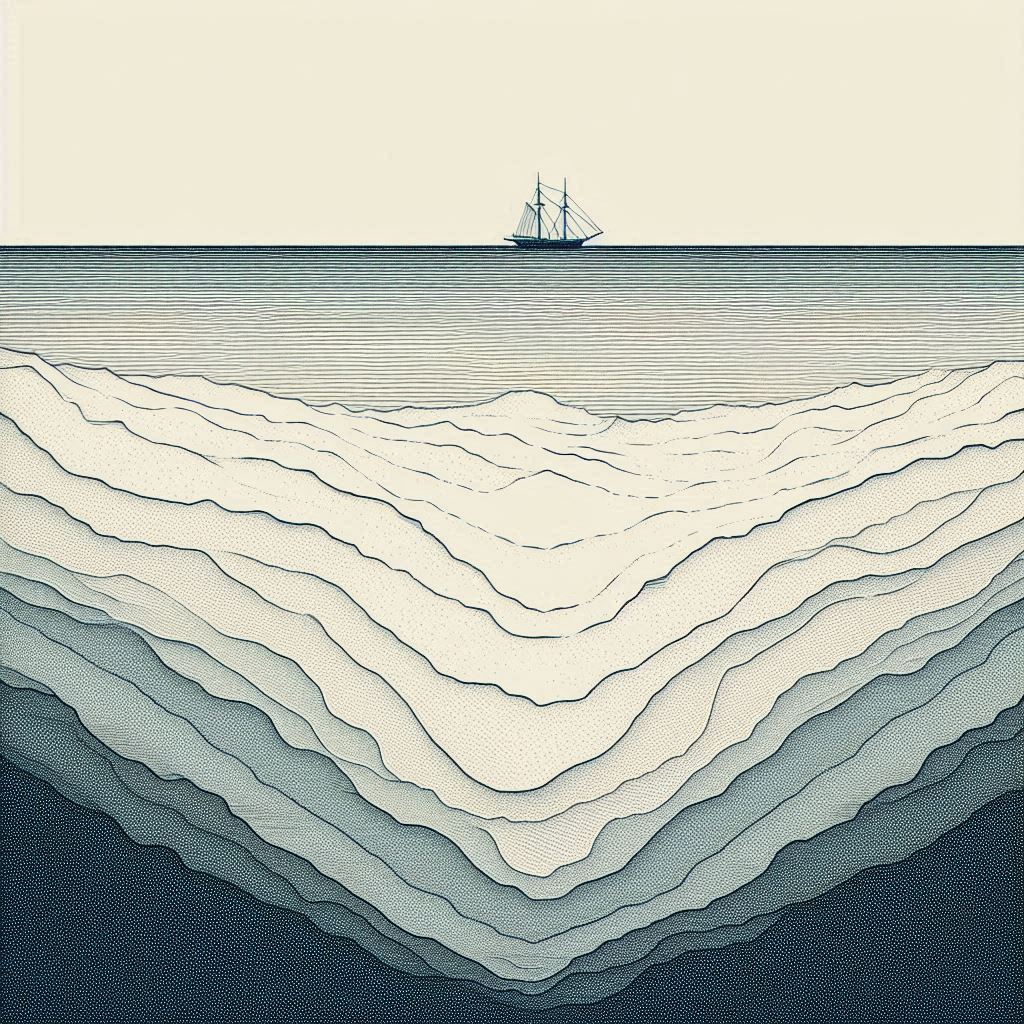
Ah misery! what great mountains of heaving water —
up, up, about (you'd think) to touch
the summit stars: ah, what yawning liquid valleys -
down, down, about (you'd think) to plumb the black
abyss. Look where I may, there's only sky and water,
here swollen waves, there menacing clouds: between,
howl and vast ground-bass of winds: the sea-swell cannot
decide which master to obey,
for now from the red east the tempest gathers momentum,
now veers round from the twilit west,
now blasts with chill fury from the ice-dry Pole Star, now from
the south flings its cold front into the fray.
The steersman's at a loss, can't work out when to close-haul her,
when to run with the wind. His expertise
is foxed by such four-way troubles. We're surely done for,
no hope of safety. As I speak, a wave
drenches my face. The sea will overwhelm my spirit,
I'll gag down the killing water, all my prayers
frustrated. My loyal wife grieves only for my exile —
the one misfortune of mine she knows and laments.
She has no idea I'm being tossed around the ocean,
no idea that I'm wind-whipped, at death's door.
What good luck that I didn't allow her to board ship with me — that would have meant (poor me!)
enduring a double death. As it is, though i perish, her freedom from danger guarantees
my demi-survival. Ah, see that swift lightning flicker
amid the clouds, hear the crash
shatter the heavens! Those seas now pounding at our timbers
slam home like artillery-stones in a city wall.
Here surges a huge wave, overtopping all waves before it,
the proverbial tenth. It's not
death as such that I fear, but this wretched way of dying —
only spare me shipwreck, and death will come
as a blessing. Whether you're caught by cold steel or natural causes,
it's something, when dying, to lie on solid ground,
to bequeath your remains to your kinsfolk, in expectation
of a proper tomb, not to be fishes food.
Even suppose I deserve such an end, I'm not the only
passenger aboard: why should my
punishment drag down the innocent? 'You gods in heaven,
you sea green gods of the deep (I implore both groups),
stop your threats, let me lug to its appointed destination
this life that Caesar's most merciful anger spared!
If you want me to pay the penalty I deserve, remember
my judge himself has rated my fault as short
of a capital sentence: if Caesar had wished me across the Stygian
lake, he could have dispatched me without your aid.
He owns no invidious quantity of my life-blood: what he
gave he can withdraw again at will.
Explanation:
Roman poet Ovid’s Tristia (8 CE) provides a fascinating and ancient reflection upon the process both of navigating the littoral boundary and inhabiting its shore. The sea space is prevalent as a location of nostalgia and loss, but also reflection upon love, modes of human connection, communication, and personal and political identity. Tristia, and the metaphors it contains, has served as a powerful reference point and source of inspiration for authors up until the present day – several of whom (particularly Osip Mandelstam, Maria Stepanova, and Oles Honchar) are also featured in this collection. It is a seminal illumination of the littoral boundary as a space of exile, self-realization, and transition between shifting (or collapsing) realms of knowledge.
Citation: Ovid. "Tristia." The Poems of Exile: Tristia and the Black Sea Letters., trans. Peter Green, University of California Press, 2005. pp. 66-67.