Lesia Ukrainka — By the Sea
Lesia Ukrainka (1871 – 1913) is the pen name of Larysa Kosach, a Ukrainian poet, playwright, author, and translator who requires little introduction. One of Ukraine’s most renowned cultural figures, Ukrainka’s writing is imbued by a pursuit of political and national freedoms, and draws broadly upon classical and canonical works from the Old Testament to Greek and Roman mythology. She is considered a pioneering voice of Ukrainian feminism, with plays such as Cassandra and A Woman Possessed endeavoring to re-imagine canonical stories from the historically silenced or omitted perspective of female characters. Ukrainka battled tuberculosis for much of her life, and spent extensive periods in health resorts on the Black Sea coast.
Excerpt:
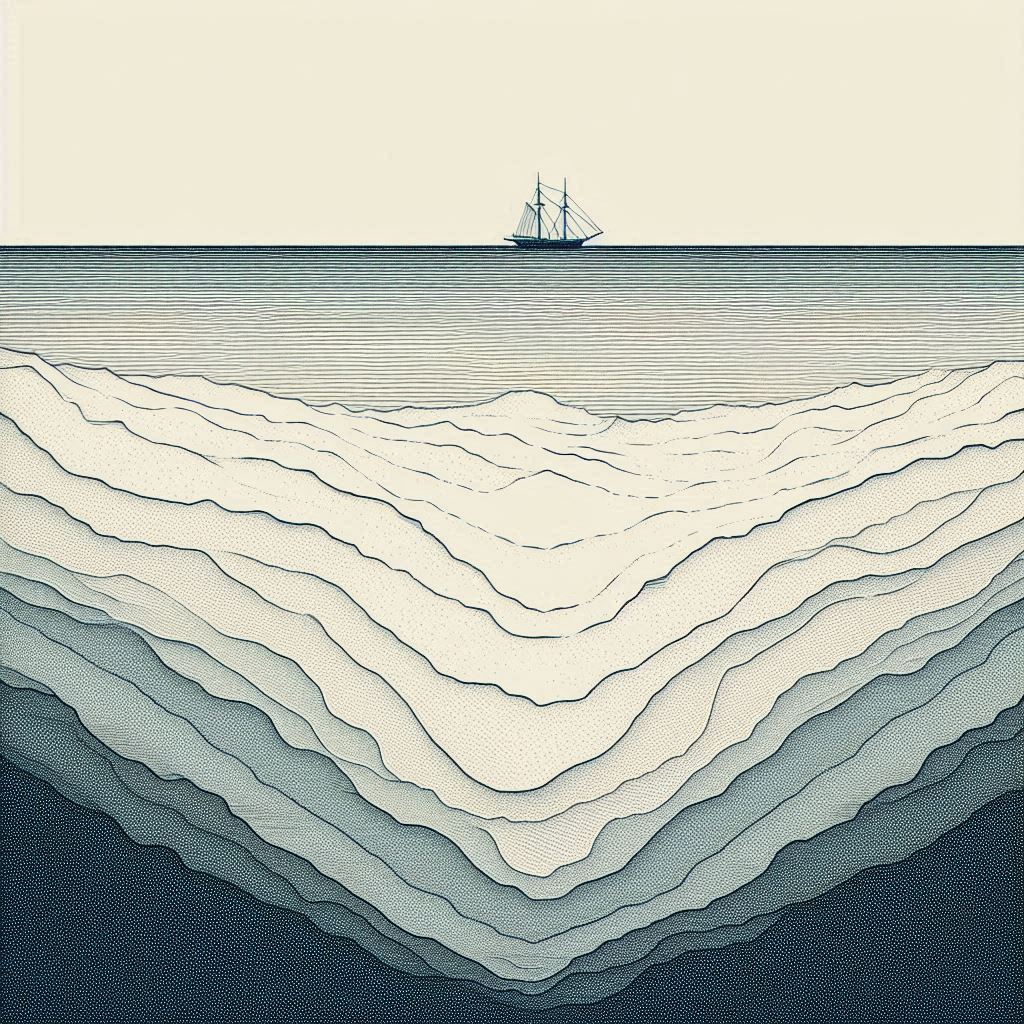
Often, when I would lie by the loneliest of seas beneath the overhanging rock face, looking at the crests of the waves, at the clear horizon, I felt as though I had found myself in a country where people had never been or were now long gone. I must admit that this dream was rather enchanting. Misanthropy is not in my nature, but sometimes I like to escape people for a little while in order not to start hating them. I heard the expression somewhere that nature by itself, the landscape by itself, without people, is like a frame without a picture; yet I tend to think of it as a picture without blemish.
Looking on from afar, even the town that spilled out over the plain above the sea never seemed to me like the work of human hand, but merely a part of the landscape. In the evenings, when only the town’s lights were visible and the houses were concealed in the darkness, I was reminded of fairy tales about a magic mountain full of red gold and precious gems, which, upon hearing the magic words, would open itself up before the brave traveller. Truly, the mountains that darkened all around the bay became almost transparent, like hundreds of bright little open windows through which shone living gold. On the mountain peaks far, far away blazed the fires of shepherds, and sometimes I could not make out whether it was a star rising from behind the mountain or the gleam of a watchman’s beacon.
The sea would roar; the little pebbles seized by the surf would rattle almost in rebuke of the fickle water that never gave them respite. The seagulls would flock above the water and whine greedily, in good or bad weather, by day or by night. The venerable Crimean trees stood quietly by – only a great storm could make them rustle like our oak groves. The rocks and cliffs above the shore seemed even more motionless against the ever-living, ever-moving sea, which changed its visage with each passing cloud, each change in sky’s colour, yet without ever ruining the harmony of the picture.
It was only when the sharp, brass sound of a military orchestra, a fragment of an army song from the Livadia barracks, or the whistle of a steamer floated over from the city; it was only when an enraged wave spewed up corks, peelings, old shoes and all sorts of human cast-offs on the shore – only then when would the harmony suddenly rupture, and the dream of an uninhabited country vanished.
People are everywhere! an offended thought would say, frightened by its encounter with filth, poverty, and all of human misery, but I suppressed it with various sayings, old and new, with memories, and with pictures of people that were without blemish.
Forced by my own impotence, I came to live in the same town that from far away had seemed to me like a part of the unpeopled landscape. There had been people there always and everywhere. Even when I sat alone in my lonely room, I could hear them moving from behind the wall, or above the ceiling, or below my house. There were people, but alongside them were work and my thoughts, and these new thoughts drowned out the old thoughts which were hostile to other people. The things which from a long-range perspective appeared to be a blemish or a sign of disharmony were not so offensive up close. That often happens. When I was a child, I was made uncomfortable by the great oil paintings at exhibitions full of ruthless realist art, such as Ilya Repin’s paintings, for instance: in order to break up this dour illusion I would go right up close to the painting; there I would see it no more. Before me were only the streaks of paint through which shone the coarse threads of canvas, and it seemed almost miraculous that they had so appalled me from afar.
Now, when the streaks have once again merged to form a distant picture, I want to put this picture on paper and once again look at it more closely, for it already has captured too much of my attention and begun to oppress me.
You can check out the integral work here!https://www.londonukrainianreview.org/posts/by-the-sea
Explanation:
Ukrainian poet and playwright Lesia Ukrainka’s By the Sea (1898) reflects upon the Black Sea shore as both a refuge from the “civilized” inland world and threshold of transformation. The littoral emerges here as a site of solitude and estrangement, yet also one of revelation, where distance from society enables a reorientation of perception. In this excerpt, the sea becomes a lens through which the familiar is unsettled and human experience is reframed.
Citation: Ukrainka, Lesia. By the Sea. In London Ukrainian Review, Special Issue no.2. Trans. Daisy Gibbons, 2022, https://www.londonukrainianreview.org/posts/by-the-sea.