Anton Chekhov —The Duel
Anton Chekhov (1860 – 1904) is a Russian playwright and author born in the port city of Taganrog, on the Sea of Azov, during the period of the Russian Imperial Empire. He is revered as one of the greatest short story writers of all time, and began his professional life as a doctor. A livelihood that served as a source of inspiration for much of his writing, he once wrote “medicine is my lawful wife and literature is my mistress.” Chekhov’s is a style of literature that meditates upon the often subtle, yet paradoxical tensions of everyday life – upon questions of action and inaction, connection and estrangement, dreams, hopes, and disappointment, as just a few examples. The Black Sea and littoral space play a prominent role as setting, metaphor, and motif across his work. For many, Chekhov’s is a name deeply intertwined with ideas of a Black Sea literature. Among his many works, "The Duel" is a fictional novella that enjoyed great success as was re-issued nine times during the 1890's. The character Von Koren's philosophy was built around Chekhov's conversations with zoologist and writer Vladimir Wagner on "the right of the strong one."
Excerpt:
The deserted seashore, the insatiable heat, and the monotony of the smoky lilac mountains, ever the same and silent, everlastingly solitary, overwhelmed him with depression, and, as it were, made him drowsy and sapped his energy. He was perhaps very clever, talented, remarkably honest; perhaps if the sea and the mountains had not closed him in on all sides, he might have become an excellent Zemstvo leader, a statesman, an orator, a political writer, a saint. Who knows? If so, was it not stupid to argue whether it were honest or dishonest when a gifted and useful man—an artist or musician, for instance—to escape from prison, breaks a wall and deceives his jailers? Anything is honest when a man is in such a position.
Explanation:
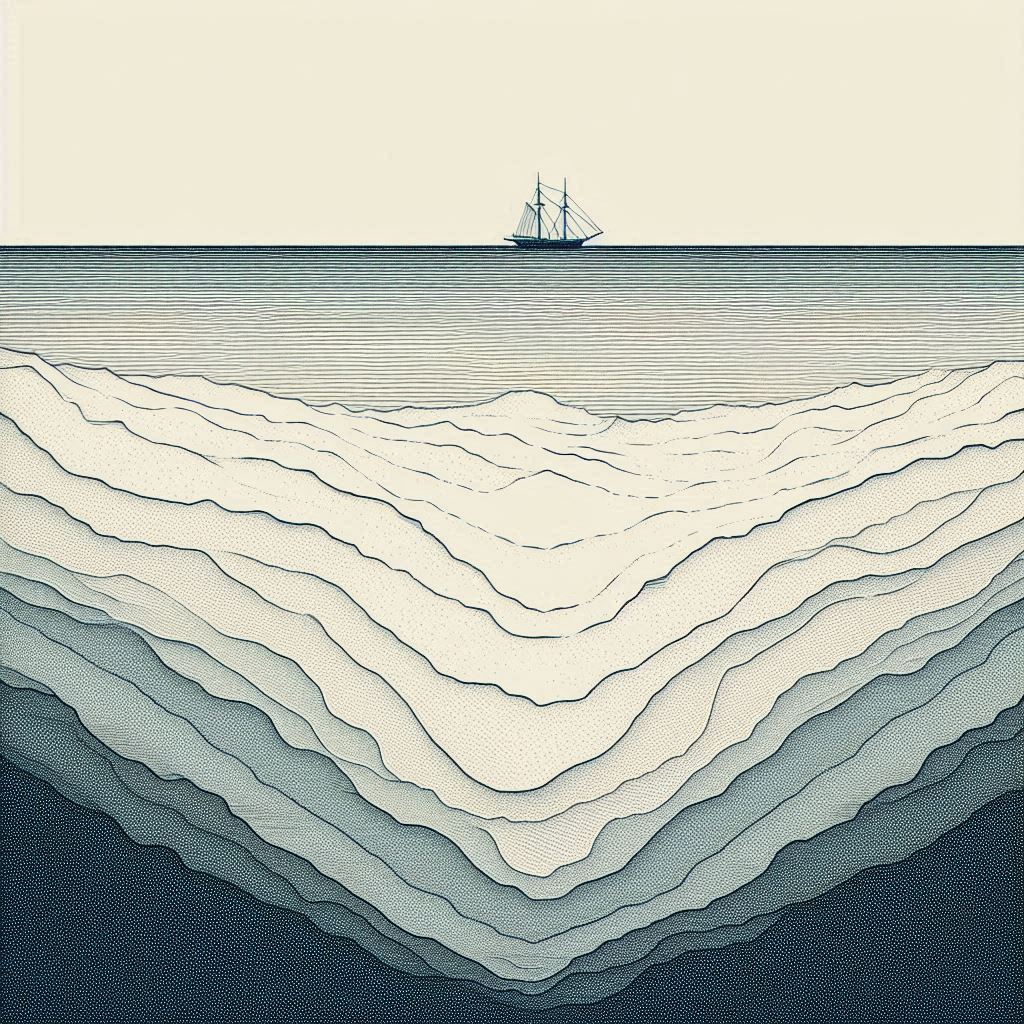
Russian prose writer and playwright Anton Chekhov’s novella, The Duel (1891), reflects, in this particular excerpt, upon the littoral space as a site of entrapment and reflection. It is a space within which the protagonists – Ivan Andreitch Laevsky and his mistress, Nadezhda Fyodorovna (a married woman who has run away with him to the shore) – must confront the reality of their new lives, in far remove from the society they have left behind. Here, the coast is simultaneously an isolated periphery and force of existential confrontation: one where processes of introspection unfold and relationships, pasts, and possible futures are contemplated.
Citation: Chekhov, Anton. 1891 The Duel. Trans. by Constance Garnett.