Oles Honchar (III) — Shore of Love
Oles Honchar (1918 –1995) was a Ukrainian writer and public figure, born in the village of Lomivka, which was incorporated into the Ukrainian city of Dnipropetrovsk shortly prior to the second world war In 1938, Honchar enrolled into the Department of Philology of Kharkiv University, however, his studies were interrupted by the outbreak of World War II. In June 1941 he joined the army as part of a student battalion. After the war, he resumed his studies, and began to write. An early novel was noticed by Yurii Yanokovskyi (another author featured in this collection), who helped to facilitate its publication. He wrote widely about conflict and war, but also about ideas of a peaceful life and moral aspects of human relationships.
Excerpt:
When a little later the archeologist was standing beside her on the ramparts and talking about the dig again, Inna this time, too, caught in his words that more profound and extra meaning that was destined only for her. She found it interesting to hear about the Scythians, about their courage and chivalrousness which Ovid himself mentioned. And the Scythian women, judging from their jewellry, had extraordinarily good taste. Real fashion-followers of the steppes!
"But all the same, why is that tower over there called Ovid's tower?" said Inna, nodding at the highest tower. "Surely Ovid can't have come here?"
"Why shouldn't he have?" responded the young man eagerly. ''Researchers, of course, believe that he never came here. I myself, though, hold completely the opposite opinion. I am sure that his light Roman sandals trampled the dust here and left footprints in our snow. Has everything really been so thoroughly researched? Surely exciting discoveries like this can still be made. Ovid was exiled to !stria, the other side of the Danube from here, that's true, but who could have prevented him from exploring the whole of what in those days was considered the North, from visiting what now is home to us? Finally he could have gone absent without leave, like Shevchenko when he went on an expedition to explore the Aral Sea despite the Tsar's interdiction. Of course, it was easiest to say that he was never here. Troy never existed either until Schliemann went and dug it up out of the dust of centuries. And all because he believed Homer's poems.
"Why shouldn't something like that have happened here? How is one to explain, for example, how the poet came by his considerable knowledge about the tribes of the steppes, the people who originally inhabited this coast? lt has been incontestably proved that Ovid had real friends among the Getae and that he even tried to write songs in the language of his place of exile. No, science has yet its last word to say and comrade Ovid, I am sure, will be allocated a residence permit here, too!"
Explanation:
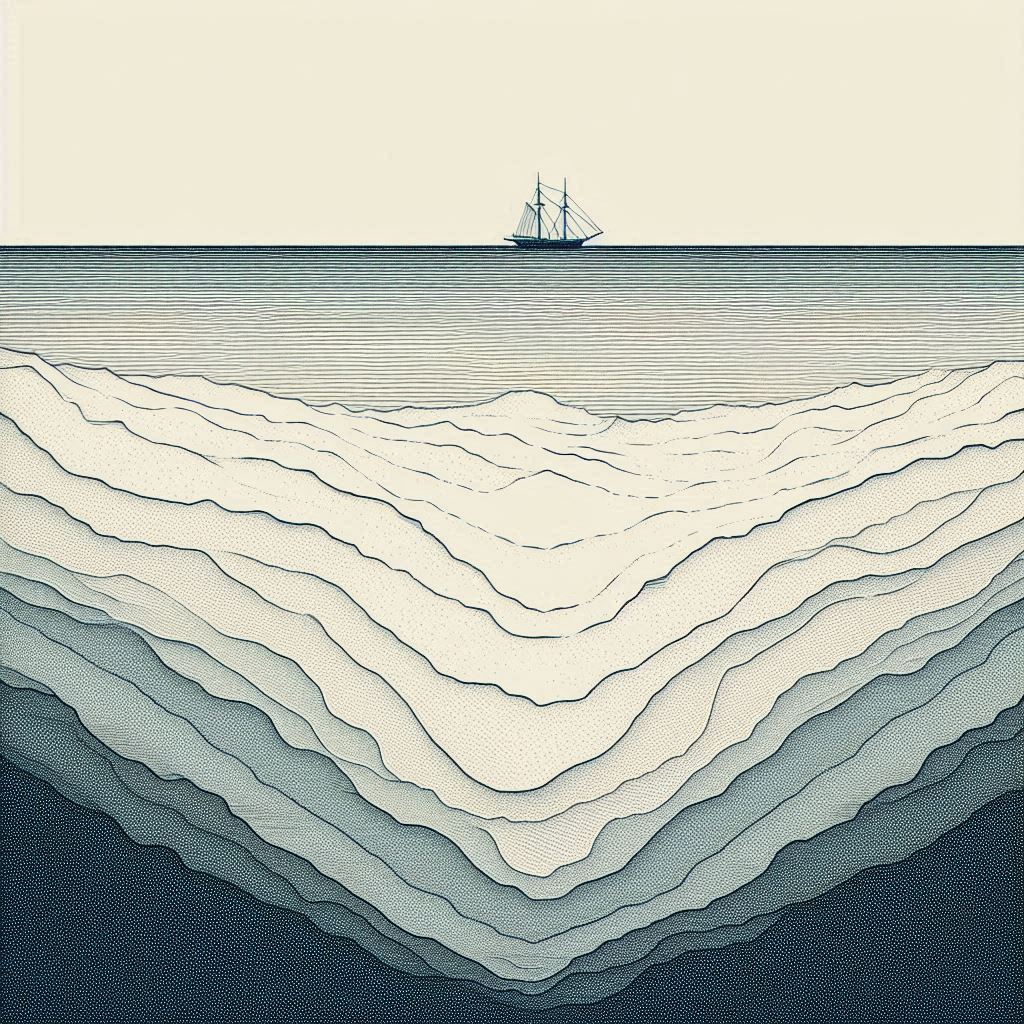
Ukrainian author Oles Honchar’s Shore of Love (1976) articulates the littoral space as a site of magic, and connection in both realms of human relationships and long-lost past. This excerpt explores the shore, once again, as a historical space – drawing upon the fate of Ovid, the Roman poet exiled across the Black Sea in 8 CE by the Emperor Augustus, and exploratory journeys of beloved Ukrainian poet, Taras Shevchenko. Here, Honchar reflects upon the magic, and methods by which we come into knowledge of the past – namely via the transgression of boundaries, both national, psychological, and littoral, and delving into the deep unknown.
Citation: Honchar, Oles. The Shore of Love. Trans. David Sinclair-Loutit, Progress Publishers, 1980, pp. 27.