Maria Stepanova (I) — Holy Winter
Maria Stepanova (1972 –) is a Russian poet, novelist, journalist, and the founder of online arts and culture forum Colta.ru. Born in Moscow, she is one of Russian literature’s most influential contemporary voices, having published over ten collections of poetry, as well as the 2017 novel-memoir, In Memory of Memory. Stepanova is a vocal critic of Vladimir Putin’s political regime and full-scale invasion of Ukraine, and resides permanently, as of 2022, in Berlin. Her writing has been largely associated with the concept of ‘postmemory’ – a theoretical framework that seeks to come to terms with complex, often traumatic, past events as they manifest in the consciousnesses of generations that follow. To this end, she engages frequently in agile and multi-dimensional practices of personal, political, and historical reckoning – deconstructing the legacy of multiple, often co-existing imperialisms, and concept of a collective “we”.
Excerpt:
I remember when I was packing to leave, for life
That first time I felt my spirit dumb within me
As if it knew what it would now have to learn
And my wife wept, and my two friends, the bravest ones,
But my daughter was away, she’d come home to find me gone.
Dawn broke—and half the night spent burning manuscripts and documents.
I took no clothes, I chose no slaves to take with me.
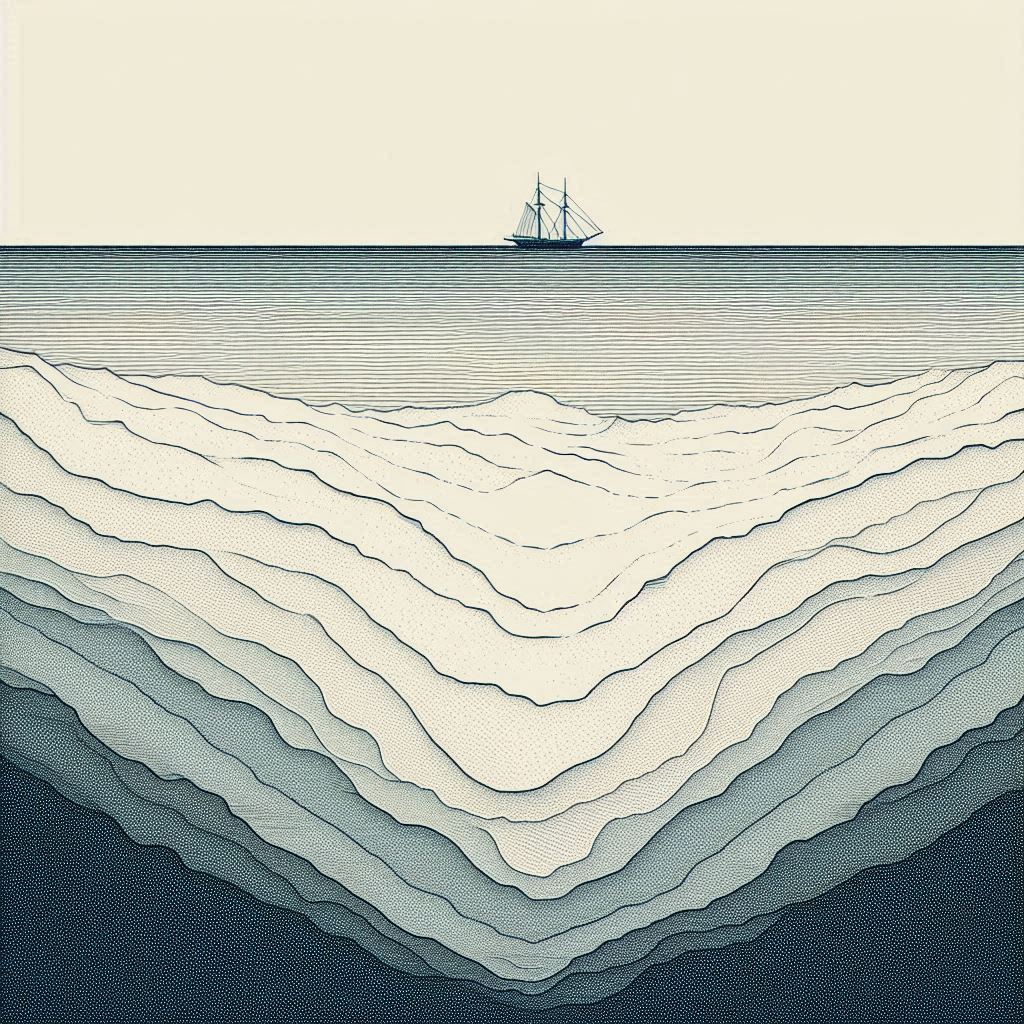
When I think back I find myself already on the ship
The sea all around me, the sea on the decks,
The helmsman prays, the water roars, sailors swear,
My nostrils fill with waves but I write on
Let’s see what tires first, the storm, or my appeal.
Explanation:
Russian poet Maria Stepanova’s epic poem, Holy Winter (2021), articulates, in this excerpt, an experience of maritime departure and political exile. It draws intensely upon the writings of Roman poet Ovid, and his own experience of exile in 8 AD – sent across the Black Sea waters, in his own words, for “carmen et error” (poetry and a mistake) by the Emperor Augustus. Reference to this (among many other) canonical texts functions as a mode of meta-commentary upon the totalitarian climate of Russia today and across history, as well as the universally isolating experience of 2020 COVID-19 pandemic. This excerpt is multi-layered and textured, illuminating the littoral space as one of inherent, and unceasing transformation. The boundaries of the shore, here, are evocative of an experience of inescapable dislocation, as well as fragmentation in conceptual realms of home, history, and self.
Citation: Stepanova, Maria. Holy Winter 20/21. Trans. Sasha Dugdale, New Directions, August 2024, pp. 5.