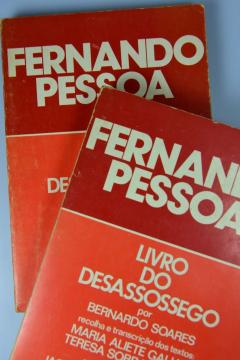
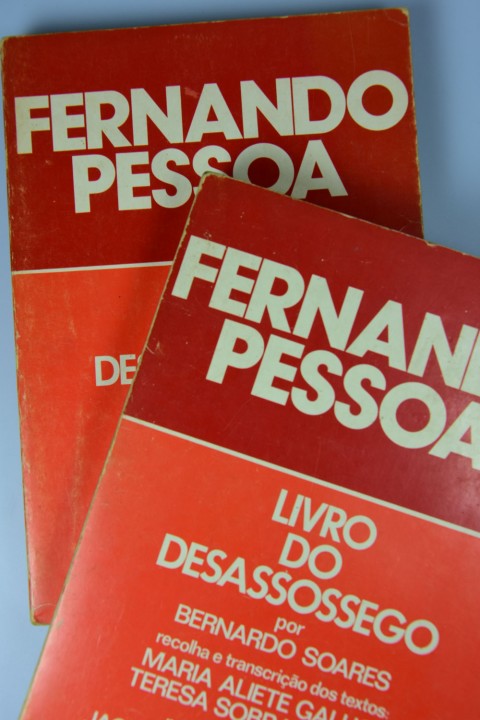
"The Book of Disquiet" by Fernando Pessoa , contributed by Joyce Kim (2025)
The Book of Disquiet was written by Portuguese author Fernando Pessoa under the heteronym Bernardo Soares, an assistant bookkeeper living in Lisbon—one of the many alternate personalities Pessoa constructed throughout his writings. The novel is composed of fragments and aphoristic prose, arranged not by Pessoa himself, but by scholars who pieced together his manuscripts after his death. The Book of Disquiet, thus, is not so much a novel (although it is shelved as one) as it is an autobiography: a self-examination of one man’s life, his thoughts anticipating death, and the legacy he left behind in his trunk full of manuscript pages, which until the end he attributed to Soares rather than himself.
At first glance, the novel seems an unlikely choice for a literature of consolation—but as I read it this past week, it struck me as an exploration of the depths of sadness, as a token of tenderness toward mundane everydays, and ultimately as an inquiry into the futility of life. Soares—Pessoa —asks, how are we to face this numbing, existential dread? How are we to make meaning out of it? And how are we to face death? There are so many striking passages throughout the novel—some, forceful philosophical reckonings; others, sardonic musings; but all of it, beautiful prose that celebrates both the anguish and ordinariness of being alive. One of my favorites comes from fragment #100, where Pessoa writes, “I was never more than my own vestige or simulacrum. My past is everything I failed to be,” a despairing, self-condemning remark—before launching into a passage that affirms “all [he wants] from life”:
“Brief dark shadow of a downtown tree, light sound of water falling into the sad pool, green of the trimmed lawn—public garden shortly before twilight: you are in this moment the whole universe for me, for you are the full content of my conscious sensation. All I want from life is to feel it being lost in these unexpected evenings, to the sound of strange children playing in gardens like this one, fenced in by the melancholy of the surrounding streets and topped, beyond the trees’ tallest branches, by the old sky where the stars are again coming out.” (#100, Zenith 97).
Life and death, and the beauty of it all, exists in tandem in our ordinary, isolated lives. And Soares recognizes this: he writes, “The dead are born, they don’t die. [...] We’re dead when we think we’re living; we start living when we die” (#178, Zenith 158).I think about Pessoa, an author who, for all his life, sought refuge from himself in heteronyms and died at age forty-seven in obscurity. The thought of his trunk—full of more than 25,000 pages of notes, musings, and utter poetry, written in the shadowed uncertainty of ever reaching an audience beyond himself—moves me endlessly. Pessoa celebrates both life and death, even as he examines it in all of its sorrow, weight, and futility—and this, for me, resonates as one of the greatest affirmations of the lives we lead and leave behind after death, which then gains infinite meaning. I hope The Book of Disquiet will do for others, especially those in grief, as it has done for me, as an anthem of futility but also a hymn to life’s preciousness.