Database for Diveristy and Inclusion in German Studies: Cultivating DIB in and beyond the canon

Gunta Stölz, Director of the Bauhaus Weaving Workshop

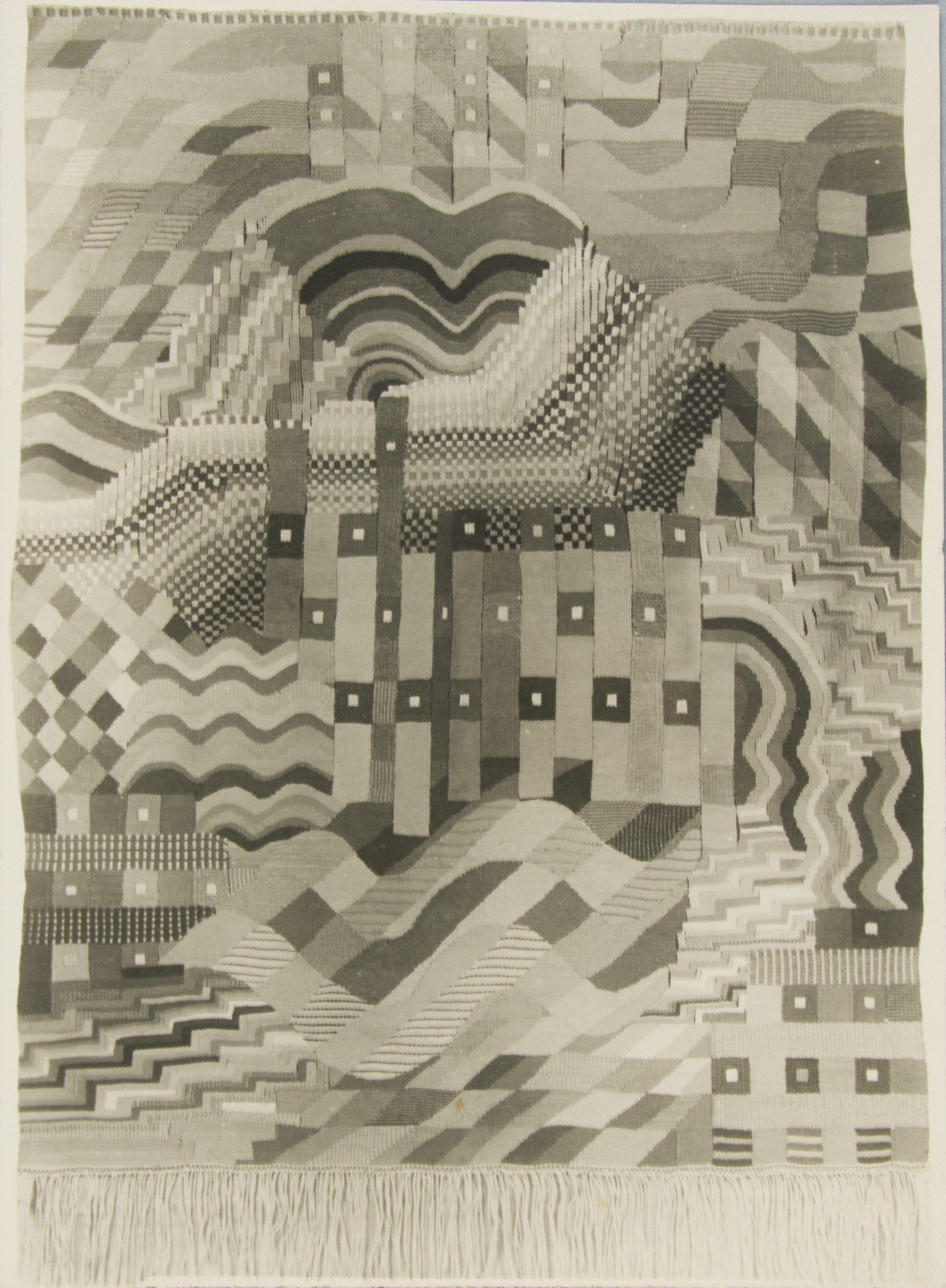
Gunta Stölzl was among the first students to join the Bauhaus weaving workshop, later serving as its director from 1927 to 1931. This impressive wall hanging made on a tapestry loom exemplifies the experimental and handcrafted character of the workshop in Weimar. Informed by Johannes Itten’s and Paul Klee’s teachings on materials, form, and color, Stölzl combines a variety of natural fibers in a warm palette to create this striking composition: an asymmetrical, almost figurative form emerging from the textile’s horizontal structure. Following the school’s move to Dessau, Stölzl declared in 1926 that tapestries were a thing of the past. Her comment reflected the workshop’s shift from unique hangings to utilitarian fabrics.
Stölzl’s work not only challenges conceptions of the Bauhaus School that omit major contributions by women craftspersons, but also broader tropes of Weimar society as bifurcated world of male scientist-intellectuals and sensuous, working-class “New Women.” Hence, alongside other women associated with the Bauhaus School, including ??? Moholy-Nagy and ????, Stölzl’s textiles might be integrated into discussions of twentieth century modernism in general, as well as the more specific microcosm of the Bauhaus workshops.
This page has paths:

This page has tags: