Database for Diveristy and Inclusion in German Studies: Cultivating DIB in and beyond the canon

Decolonizing Die Zauberflöte

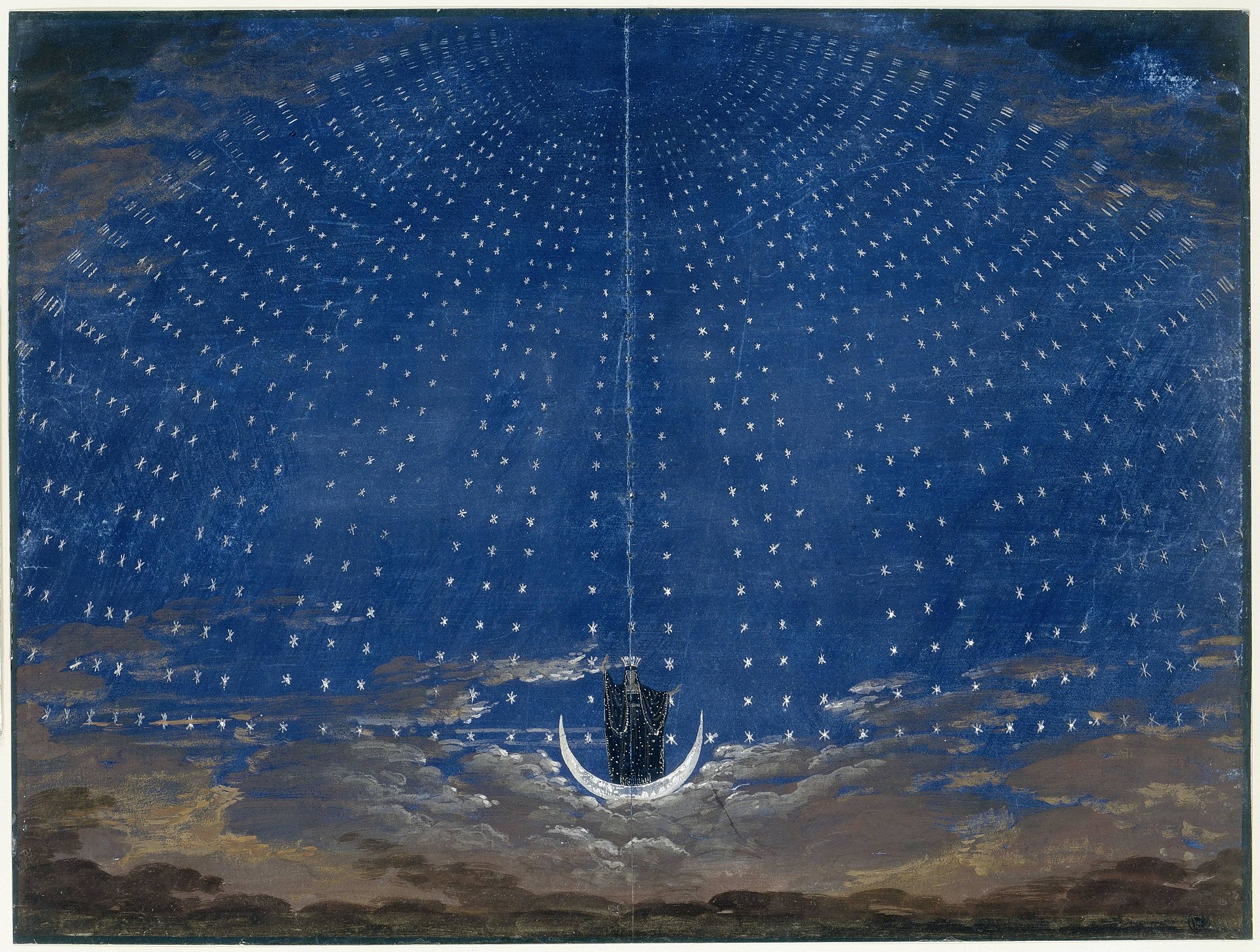
The meaning and politics of Wolfgang Amadé Mozart’s (1756–1791) final opera, Die Zauberflöte (The Magic Flute, 1791), with a libretto by Emmanuel Schikaneder (1751–1812), has continuously been the subject of scholar debate. Where scholars frequently argue that the Singspiel does nothing more than reproduce the reigning prejudices against women and Black people, more recently, others have begun to demonstrate through careful reading and research the ways in which the Mozart and Schikaneder might in fact be criticizing contradictions in the Enlightenment postulate of universalism and the lived realities of exploited groups. Without a doubt, some of the more stereotypical motifs in Die Zauberflöte, which portrays the development of the boy Tamino into a rational moral agent and his unification with the wise Pamina, may offend contemporary interpreters. This may particularly be the case with the villainization of figures of the Queen of the Night, her three ladies, and the slave Monostatos, which seems to depend on sexist and racist stereotypes. Yet if the text and music of the Singspiel are analyzed not only from the perspective of the present day, but also with careful attention to the social, political, and philosophical discourses of the eighteenth century, the political tendencies of the work may become clearer. Of note, for example, would be the fact that German intellectuals were engaged in the debates about abolition going on in England through German translations and reviews, and also took time to voice their support (or rejection) of abolitionist principles themselves. Right around the time of the composition of Die Zauberflöte, for example, several articles explicitly criticizing the institution of slavery appeared in the literary journal Allgemeine-Deutsche Literatur-Zeitung.

Primary Sources

The Mozarteum in Salzburg Austria has published a highly useful online edition of Mozart's libretti which not only provides access to all extant versions of Die Zauberflöte but is also easily navigable:

Mozart Online Edition

Secondary Sources

W. H. Auden, "Balaam and His Ass," in The Dyer's Hand and Other Essays (New York: Random House, 1948), 107-145.

Hans Mayer, "Sarastro und Papageno," in Die Zauberflöte: Texte, Materialien, Kommentare, eds. Attila Csampai, and Dietmar Holland (Reinbek bei Hamburg: Rowohlt, 1982), 261-266.

Sigrid G. Köhler, "Versklavung und Abolition als Gegenstände moderner Geschichtsreflexion in deutschsprachigen Journalen und Theaterstücken um 1800," Zeitschrift für Literaturwissenschaft und Linguistik 49 (2019): 375-398.
This page has paths:

This page has tags:

Contents of this tag: