Database for Diveristy and Inclusion in German Studies: Cultivating DIB in and beyond the canon

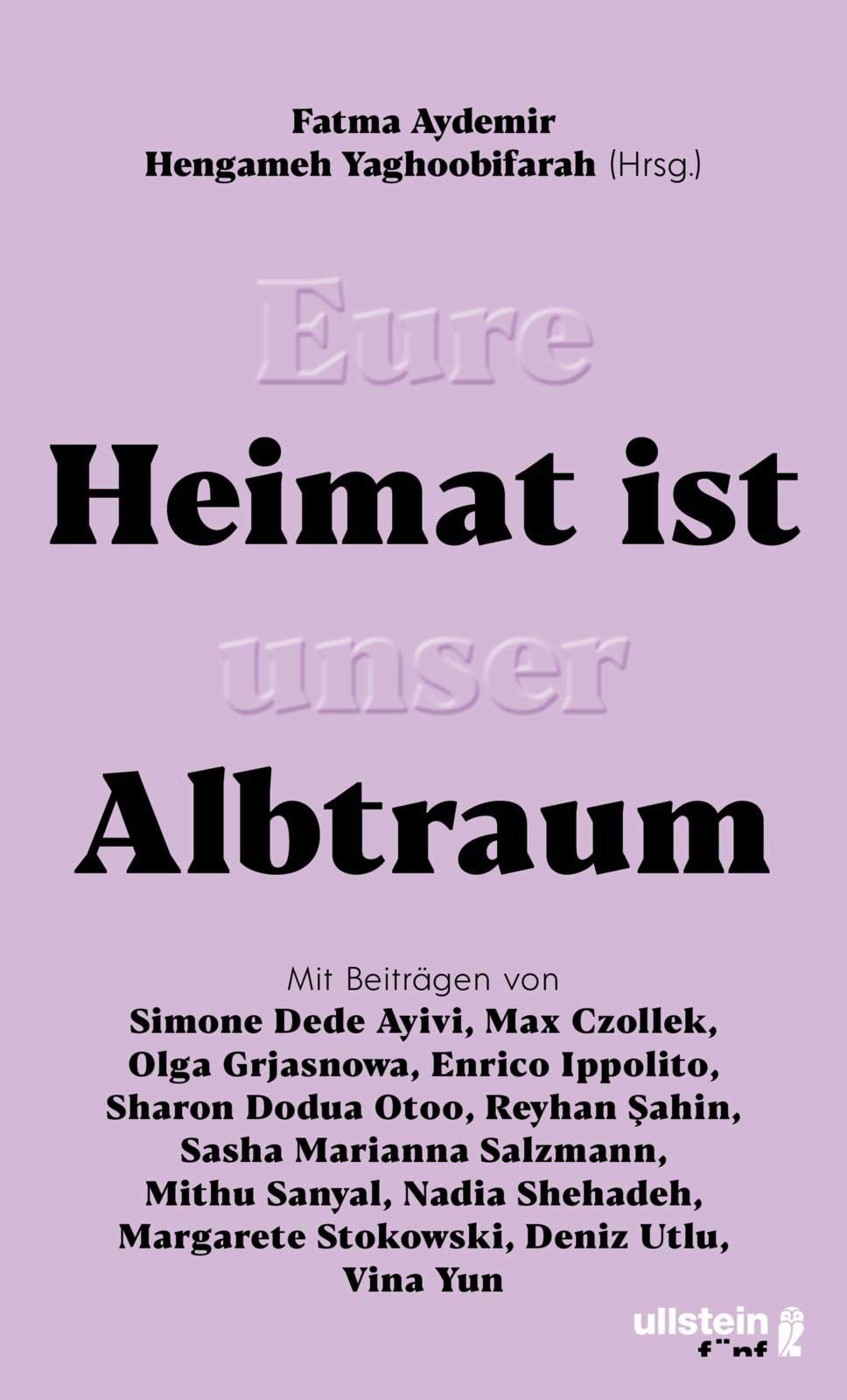
Deine Heimat ist mein Albtraum

The volume of essays Eure Heimat ist mein Albtraum (2019) features essays by politically-engaged German authors and artists on various topics relating to the German Heimat concept. Chapters on general aspects of culture (“Arbeit,” “Vertrauen,” “Liebe,” “Zuhause,” “Essen,” “Sprache,” and “Sex”) are intermingled with chapters relating more specifically to issues of race, gender, and sexuality (“Sichtbar,” “Blicke,” “Beleidigung,” “Gefährlich,” “Privilegien,” “Gegewartsbewältigung,” and “Zusammen”) in contemporary Germany. Rhetoric common in the U.S.-American social justice lexicon (e.g. visibility and privilege) is integrated throughout the volume, meaning that, in a classroom context, students will likely already be partially familiar with some of the discourses addressed. For example, notable instances of obvious cross-cultural exchange are the use of the English terms “People of Color” and “Queer” throughout. These and other aspects of the essays in Eure Heimat (such as the fact that the essay “Liebe” was composed by the British-German author Sharon Dodua Otoo) fundamentally challenge ideas of what Germanness has meant in both Germany and abroad.

The volume has also recently been translated into English by graduate students in the German Department at the University of California, Berkley, and is available online: thus, Eure Heimat is not only readily accessible to all students of German culture whether or not they have already acquired the language, but might also be an important tool for demonstrating the sorts of projects students can engage in even at early stages of their careers.

Authors featured: Sasha Marianna Salzmann, Sharon Dodua Otoo, Max Czollek, Mithu Sanyal, Margarete Stokowski, Olga Grjasnowa, Reyhan Şahin, Deniz Utlu, Simone Dede Ayivi, Enrico Ippolito, Nadia Shehadeh, Vina Yun, Hengameh Yaghoobifarah und Fatma Aydemir.
This page has paths:

This page has tags: