What are the goals?
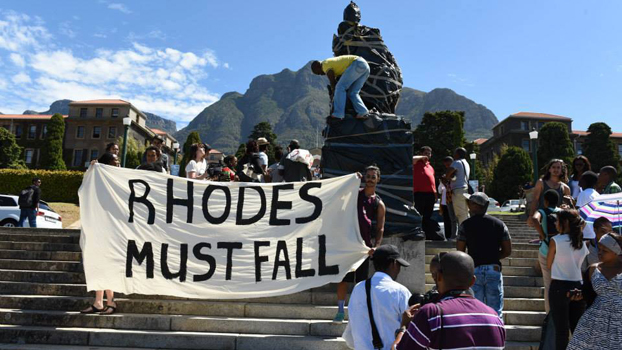
- Tackling colonial iconography, where it is expressed in ways that glorify the perpetrators of colonial violence and their actions. The debate around statues is complicated, as statues represent values, and it is certainly true that values change over time across societies. However, the removal of statues is not about asserting that there is some kind of perfect alternative, but about contextualizing and educating on the history of these figures, which is not done sufficiently through their commemoration. The glorification without criticism is the target; the movement does not live or die by the particular configuration of statues in certain areas (Rhoden-Paul, 2015).
- Decolonizing the curriculum, both in terms of epistemological pluralism, and in terms of the actual content being taught. In South Africa, the movement seeks to 'have a more honest view of our past. We can free ourselves from the shackles of a divisive and distorted narrative and develop a more inclusive sense of who we are as a nation' (Lalkhen and Roomanyay, 2020). Decolonizing the curriculum means teaching the histories of colonialism in ways that are neither white-washed nor condemn the power inequalities to the past; it also means critically engaging with the frameworks of knowledge themselves, examining how the production of knowledge is imbricated in circuits of value that continue to be racially hierarchical (Nhemachena et al., 2017).
- Making educational institutions more accessible, as they continue to produce and be produced by the dynamics of privilege. This is not simply about setting a percentage representation goal for particular identity categories, but making educational institutions a place that actively tackles discrimination both within and outside of its own parameters, and takes concrete steps to fight inequality. This is an enormous and ongoing project, and requires a shift from 'quibbles and rhetoric to substantive gestures of inclusivity' (Nyamnjoh, 2016:207).