Rhodes Must Fall, Decolonizing Education, and the Politics of Commemoration
Introduction
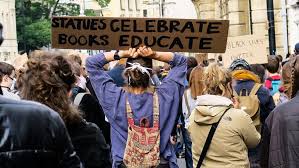
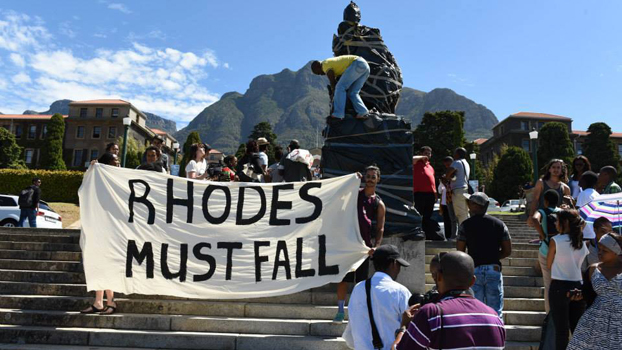
In March of 2015, Chumani Maxwele ignited the Rhodes Must Fall movement by hurling human excrement at the University of Cape Town's statue of Cecil John Rhodes. He was inspired by Andile Lile dumping faeces in 2013 on the steps of the Western Cape provincial legislature in Cape Town, in order to protest the governmental failure to provide adequate sanitation to poor Black families (Ahmed, 2020), and directed this form of protest towards the statue of someone whose imperialism has arguably shaped the vastly unequal neo-colonial conditions under which institutions of higher education operate today, both in Africa and other continents. As a result, a movement was sparked that continues to resonate in a variety of contexts across the globe.At the core of the Rhodes Must Fall movement, and its localised iterations (such as the Faidherbe Must Fall movement of Senegal), is a commitment to decolonization, in particular that of institutions of education. Decolonizing movements seek to dismantle the ways in which colonialism has shaped the histories of education, from content to architecture, in such ways that reflect and reproduce discriminatory power relations, while exposing and countering the production of neo-colonialism that continues to shape education. Rather than see colonialism as 'a very distant history that would be tacitly acknowledged but never regretted' (Chaudhuri, 2016), movements to decolonize education highlight how colonialism 'was always more than a military project. It was a project of ideas: of upholding the supremacy of the colonizers. And that project remains alive and well,' (Allnutt and Holden, 2016). Rhodes Must Fall is one such iteration of the ways in which a new project is taking shape, one that aspires 'towards a continent and world informed by solidarities and identities shaped by a humanity of common predicaments' (Nyamnjoh, 2016:195).
This project aims to give an overview of the Rhodes Must Fall movement, its origins, and its goals, attending to the ways in which its structure has been used in various local contexts to draw attention to the global legacies of colonialism today. The key themes will be explored, with the goal of creating a starting point from which we might continue to work towards decolonizing education, noting where the movement is today and how we can strengthen and support its goals.