The Imperiia ProjectMain MenuResearch Dashboardsmaps, visualizations, and moreVeles: The Data CatalogOngoing ProjectsThe MapMaker PodcastEvery story starts somewhere.Teach with MapsGalleriesKelly O'Neilldc20b45f1d74122ba0d654d19961d826c5a557f5The Imperiia Project // Davis Center for Russian and Eurasian Studies, Harvard University
The garden registers make no mention of apricot trees, although Karl Gablits describes them as ubiquitous, especially around Staryi Krym and Sudak. What accounts for the discrepancy?
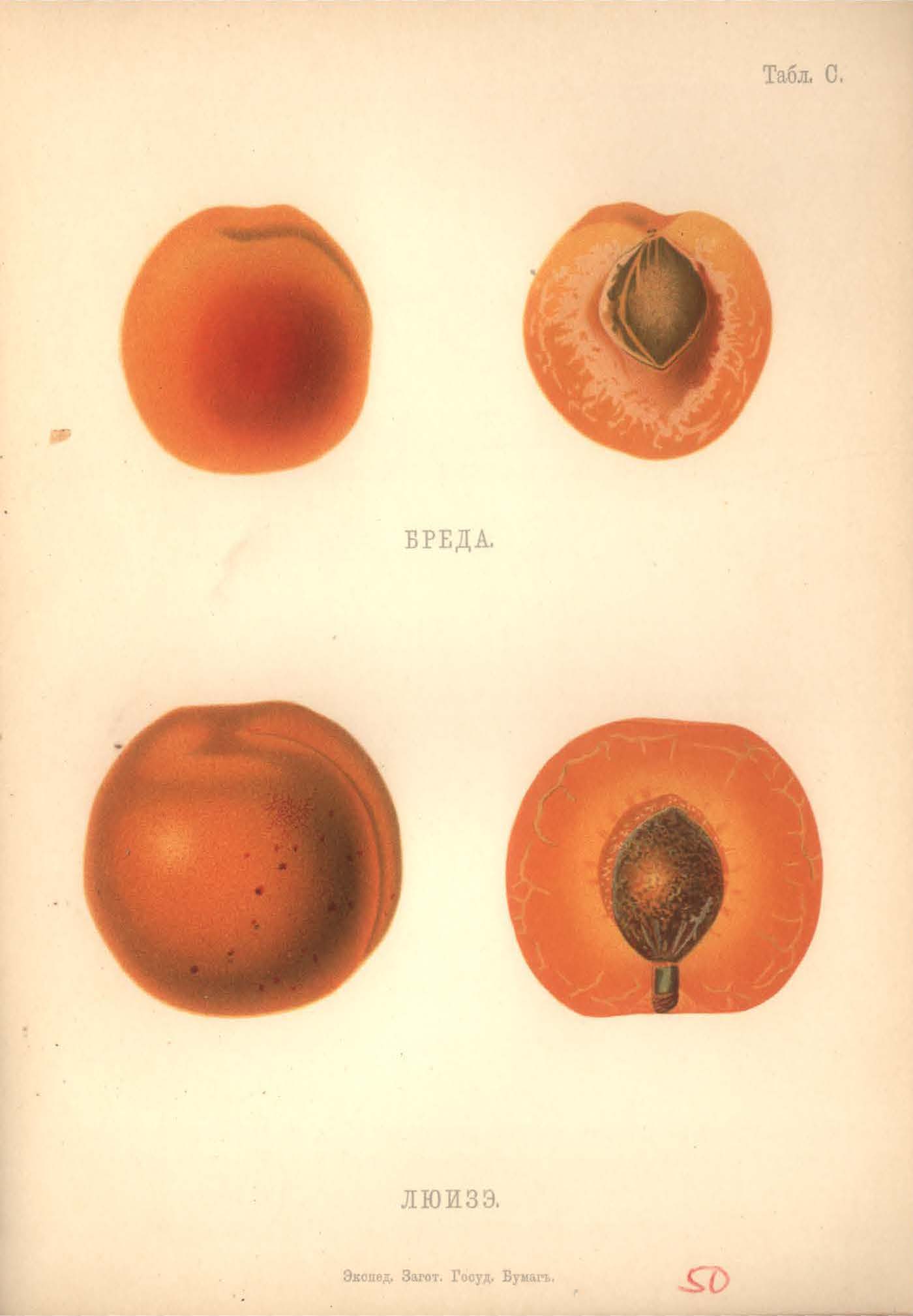
12022-07-01T09:11:58-04:00Kelly O'Neilldc20b45f1d74122ba0d654d19961d826c5a557f5Abrikos Breda, Abrikos Lyuize (apricot)3The Breda is an old variety from Africa via Holland, wildly popular in Hungary, but ranked in last place among the 25 apricot varieties recommended for cultivation in Crimea because of its low market value. The Louise was introduced from France in 1838 and ranks 10th on the list of recommended apricot varieties for Crimea.plain2022-07-01T09:17:06-04:0001/01/1883 - 01/01/1917Atlas plodov (1906) vyp. 4, no. 100Kelly O'Neilldc20b45f1d74122ba0d654d19961d826c5a557f5
This page references:
12022-07-01T09:11:58-04:00Abrikos Breda, Abrikos Lyuize (apricot)3The Breda is an old variety from Africa via Holland, wildly popular in Hungary, but ranked in last place among the 25 apricot varieties recommended for cultivation in Crimea because of its low market value. The Louise was introduced from France in 1838 and ranks 10th on the list of recommended apricot varieties for Crimea.plain2022-07-01T09:17:06-04:0001/01/1883 - 01/01/1917Atlas plodov (1906) vyp. 4, no. 100