Japanese Maple, contributed by Kaia Patterson (2025)
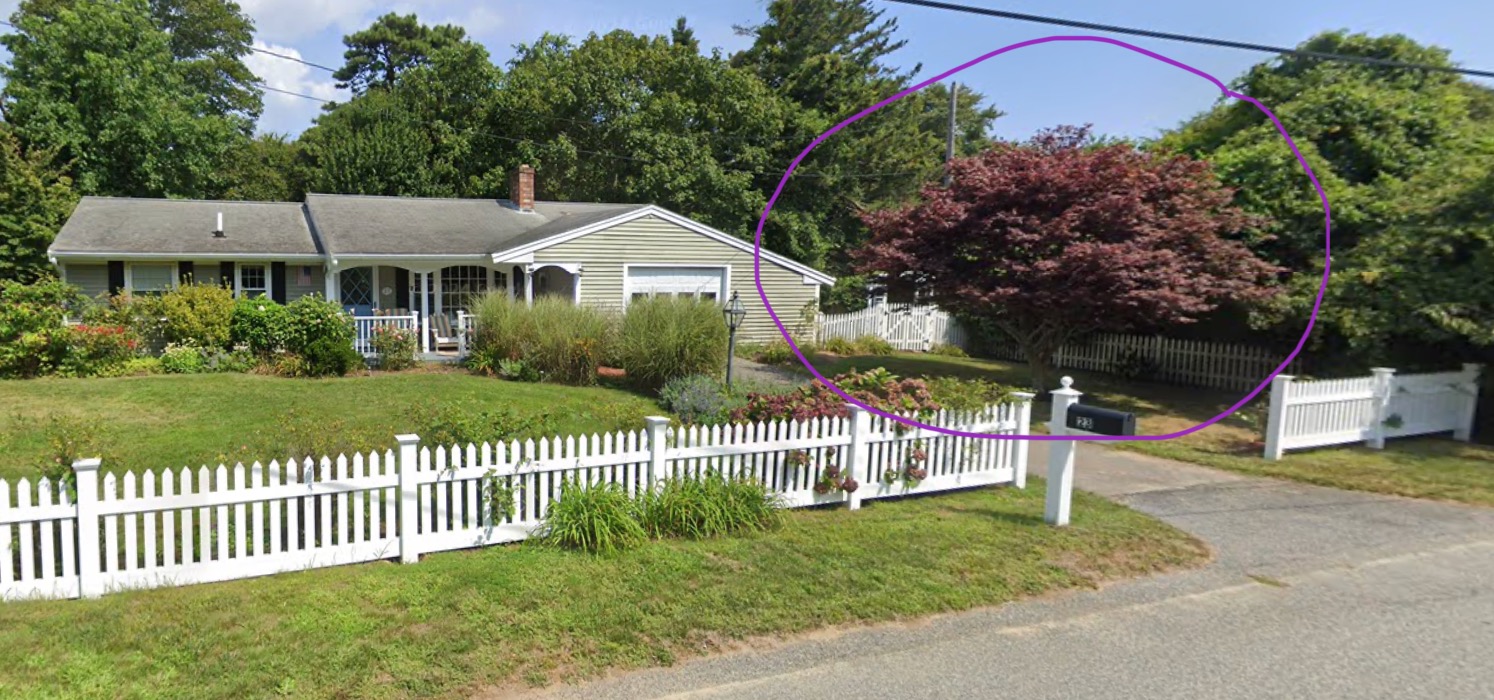
Before I was born, my grandmother planted a Japanese Maple in her backyard after my aunt's death. Since childhood, I have explored, played on her lawn, and sat underneath this tree. While I never had the opportunity to meet my aunt, I recognized a small sense of her presence which, in many ways, stands not only as a marker of her absence but also as a gesture of love and grief rooted in the earth, a way for my grandmother to hold onto my aunt through something that could continue to grow, even when her life had been cut short. Interestingly enough, in explaining her decision to plant this tree, my grandmother considered this tree as not only an act of remembrance but also a form of living art; in other words, my grandmother created something deeply intentioned: a visual, growing expression of grief and love. Over time, my grandmother cared for this tree, engaging in a quiet, ongoing act of both coping and creation. With this, coming from a family with a love for gardening, I have developed an innate appreciation of nature. During hot summer days in Cape Cod, I still recall the joys of gardening with my grandmother, mom, and dad, coupled with the day we planted our first Japanese maple on our front lawn in Chatham (as shown below). Witnessing this maple tree's growth, I have come to understand how art doesn't always hang on walls; sometimes, it takes root in the earth, expressing what words cannot say. Following the death of my grandmother in 2021, as our Japanese Maple tree in Cape Cod has significantly grown, I've come to recognize it as a reminder of both my aunt and grandmother, as well as the resilience that accompanies overcoming and finding meaning within loss.