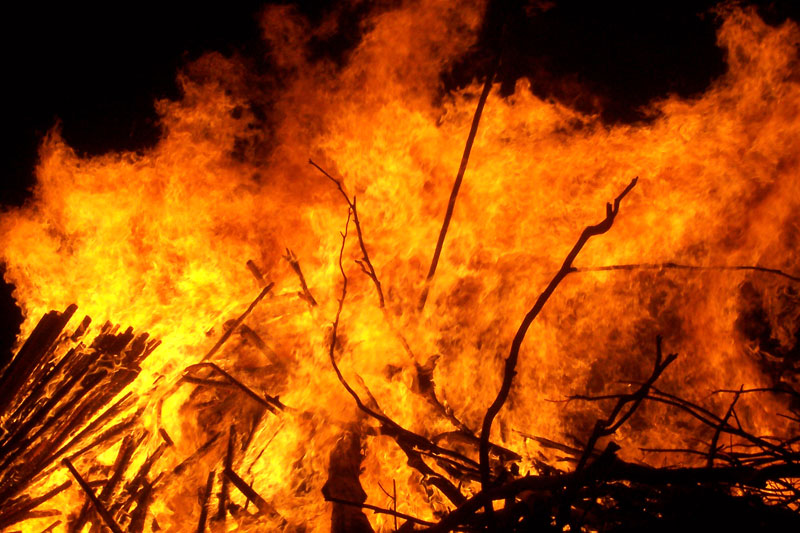
A Country in Flames
According to the Ministry of Internal Affairs of the Russian Empire, fire was "one of the most characteristic features of daily life in Russia, and one of the most frequent manifestations of the struggle with nature" waged by peasants from time immemorial. This "struggle with nature," explained tsarist officials, was to blame for "the slow pace of capital accumulation and the slow development of economic and civil life." And it was rooted in two simple facts: first, Russia was built of wood. Second, it was located on a vast plain that was subject to searing, drying summers, and dreadfully cold winters that necessitated the use of fire for survival.
The employees of the Central Statistical Committee who compiled the 1865 volume on fire statistics acknowledged the relevance of what they called "temporary" factors (a reasonable person might have wondered whether the growing frustration with serfdom had anything to do with the spike in fires across European Russia), but insisted that the phenomenon of fire be understood within a geographical and climatic context.
The burning question before us is this: between 1842 and 1864, the number of fires taking place annually in the European part of the Russian Empire doubled. This trend was out of line with population growth, and there was no demonstrable decline in living standards. What do you make of the statisticians' claim that the rising flames in rural and urban areas could be attributed to better record keeping and some simple facts of geography?
Wondering what the primary source looks like?