The Imperiia ProjectMain MenuResearch Dashboardsmaps, visualizations, and moreVeles: The Data CatalogOngoing ProjectsThe MapMaker PodcastEvery story starts somewhere.Teach with MapsGalleriesKelly O'Neilldc20b45f1d74122ba0d654d19961d826c5a557f5The Imperiia Project // Davis Center for Russian and Eurasian Studies, Harvard University
Table 1, page 1 of the Statisticheskie svedeniia o pozharakh
12018-03-08T10:30:04-05:00Kelly O'Neilldc20b45f1d74122ba0d654d19961d826c5a557f5Incidents of arson per provinceKelly O'Neill1plain2018-03-08T10:30:04-05:00Kelly O'Neilldc20b45f1d74122ba0d654d19961d826c5a557f5
12018-03-08T10:30:39-05:00Kelly O'Neilldc20b45f1d74122ba0d654d19961d826c5a557f5Losses in rublesKelly O'Neill1plain2018-03-08T10:30:39-05:00Kelly O'Neilldc20b45f1d74122ba0d654d19961d826c5a557f5
12018-03-08T10:30:27-05:00Kelly O'Neilldc20b45f1d74122ba0d654d19961d826c5a557f5Number of burned householdsKelly O'Neill1plain2018-03-08T10:30:27-05:00Kelly O'Neilldc20b45f1d74122ba0d654d19961d826c5a557f5
12018-03-08T10:29:48-05:00Kelly O'Neilldc20b45f1d74122ba0d654d19961d826c5a557f5Number of firesKelly O'Neill1plain2018-03-08T10:29:48-05:00Kelly O'Neilldc20b45f1d74122ba0d654d19961d826c5a557f5
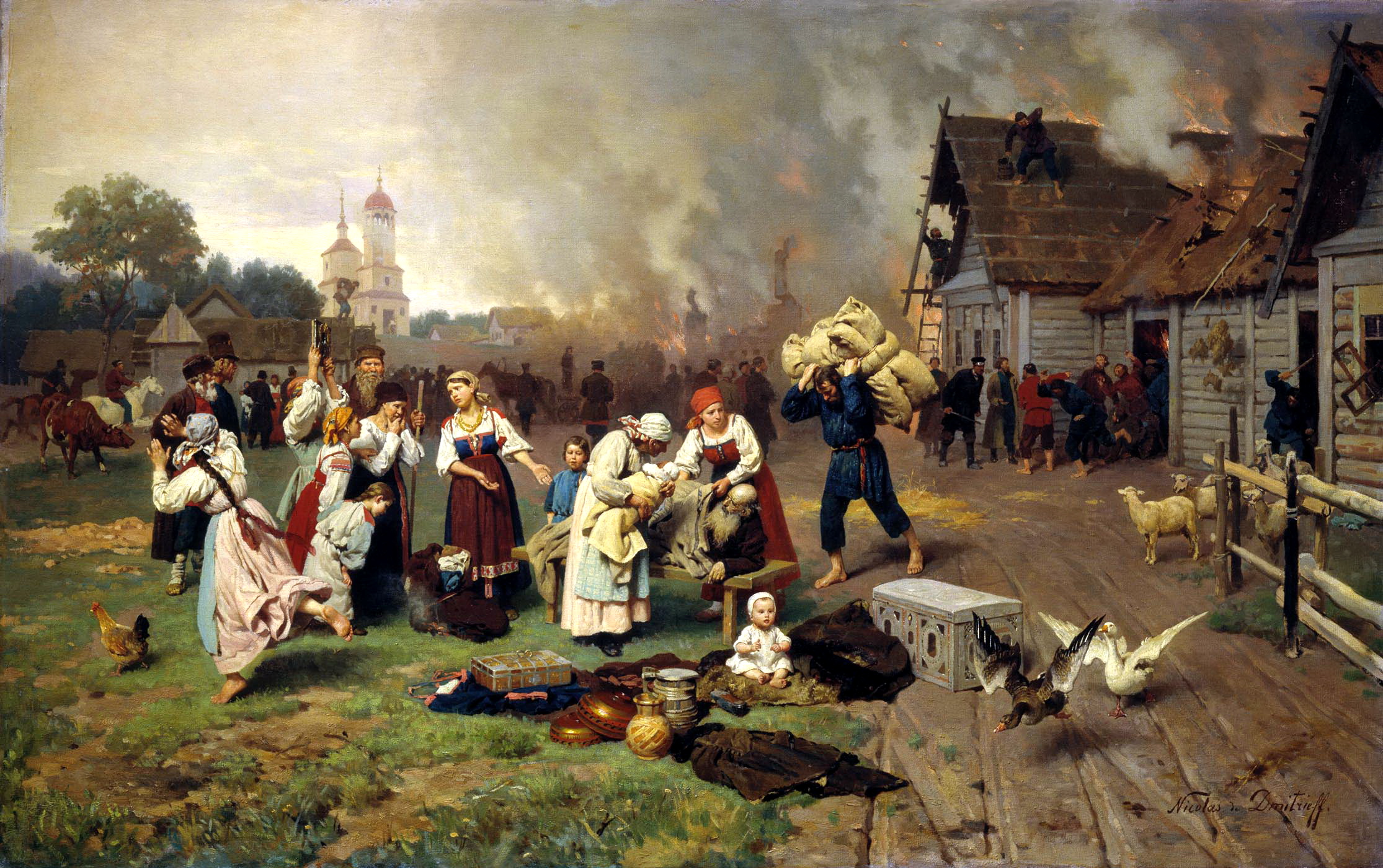
According to the Ministry of Internal Affairs of the Russian Empire, fire was "one of the most characteristic features of daily life in Russia, and one of the most frequent manifestations of the struggle with nature" waged by peasants from time immemorial. This "struggle with nature," explained tsarist officials, was to blame for "the slow pace of capital accumulation and the slow development of economic and civil life." And it was rooted in two simple facts: first, Russia was built of wood. Second, it was located on a vast plain that was subject to searing, drying summers, and dreadfully cold winters that necessitated the use of fire for survival.
The employees of the Central Statistical Committee who compiled the 1865 volume on fire statistics acknowledged the relevance of what they called "temporary" factors (a reasonable person might have wondered whether the growing frustration with serfdom had anything to do with the spike in fires across European Russia), but insisted that the phenomenon of fire be understood within a geographical and climatic context.
The burning question before us is this: between 1842 and 1864, the number of fires taking place annually in the European part of the Russian Empire doubled. This trend was out of line with population growth, and there was no demonstrable decline in living standards. What do you make of the statisticians' claim that the rising flames in rural and urban areas could be attributed to better record keeping and some simple facts of geography?
Wondering what the primary source looks like?
12024-03-01T13:44:47-05:00Explore a bit of fire data7The governors didn't like writing reports. Who can blame them?plain2024-03-05T23:58:05-05:00The Central Statistical Committee compiled fire data from two distinct but closely related sources: biweekly reports submitted by provincial governors, and annual summaries compiled by those same provincial governors. The biweekly reports were supposed to include the exact days of each incident, along with the location, cause, number of homes or other buildings burned, and the value of lost property (calculated in rubles) in both town lands and districts.
The Committee found, however, that there were "gaps" and inconsistencies in the reports. The annual summaries often contained different information than what had been submitted in the incremental reports. They tended to offer more detail about cause and value of lost property (neither of which was easy to establish within days of the fire), though it was universally unclear what was included in the tally of burned buildings: some governors included only complete losses, while others described damaged property as well.
In other words, there are many reasons to take the 1865 volume with a grain of salt. The beautifully laid-out tables give us only a rough sense of what burned, when, and where. You won't find many answers in them - or in the maps we made of them - but you will find that they produce an endless list of questions.