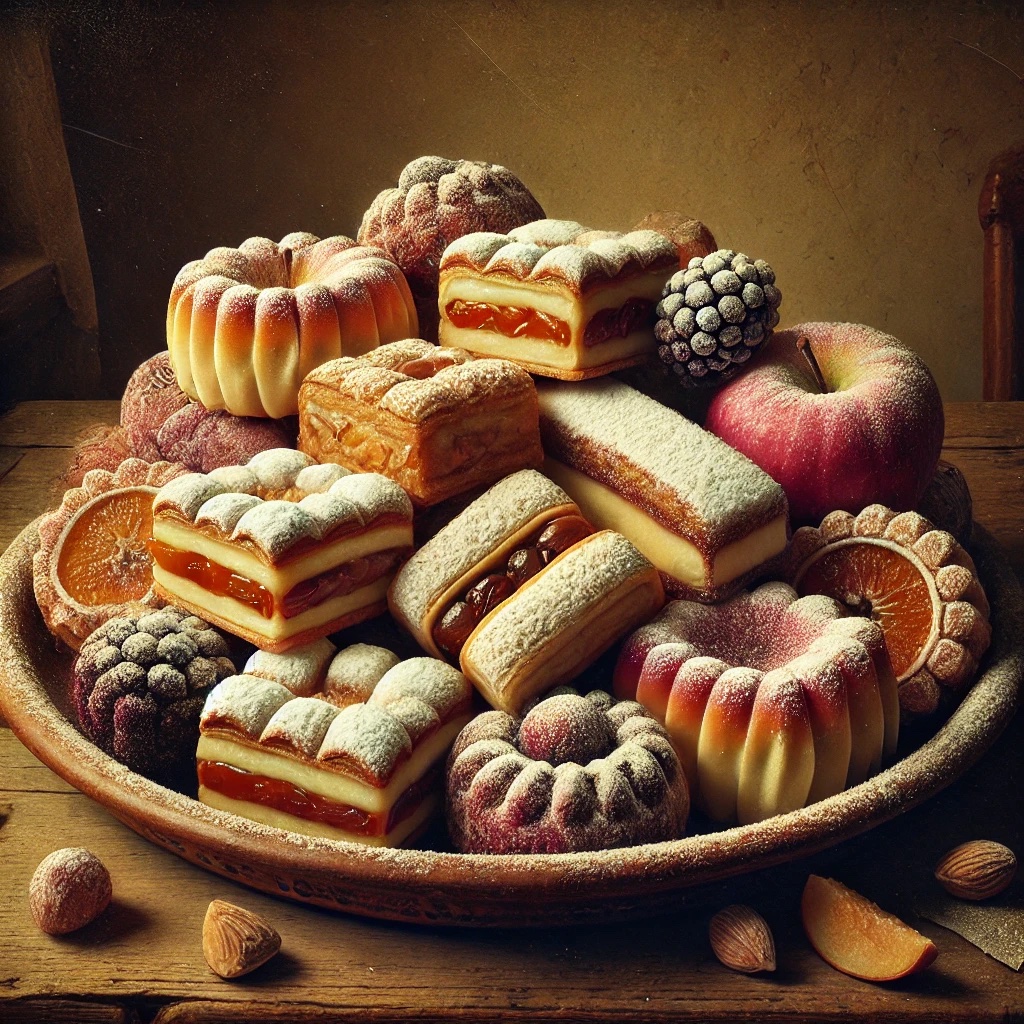
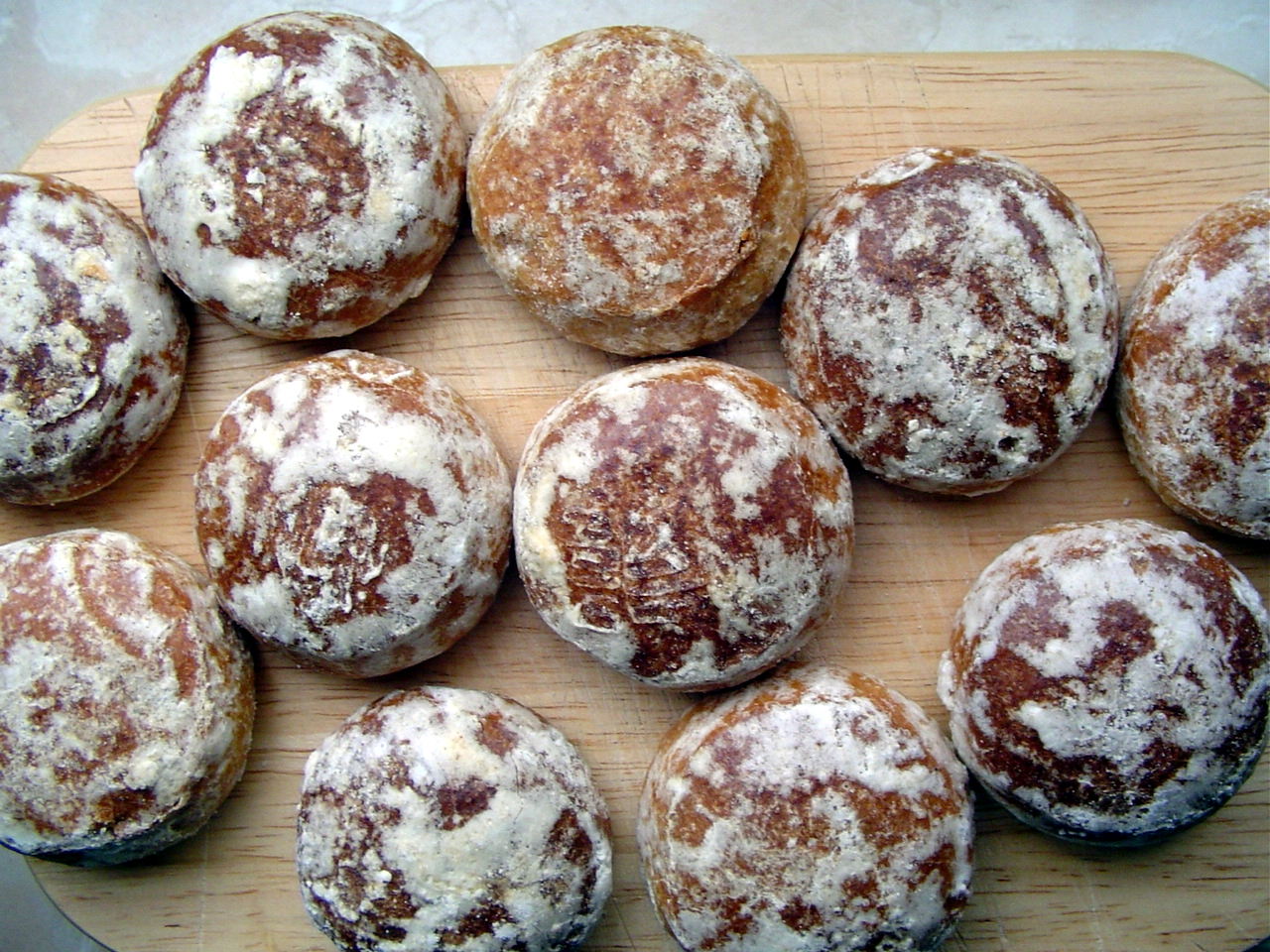
Where did they make the chocolate (and the caramel and the sponge cake)?
Use the filter in the upper right. The larger the colored circle, the greater the % of production took place at that location. *Note: In some cases the Factory Index does not specify which confections were produced at a given factory. We included this general "confections" data on the map as its own category. Go full screen by clicking here.
Wait, what is a montpensier?
Our illustrated glossary of confections is here to help. Rest your cursor on a confection name to learn more.A Few Slices of Historical Context
Each confection produced in late imperial Russia has its own story to tell, composed of moments of arrival or discovery, periods of development, and phases of transition. Rather than tell all of those stories, we assembled a few of the layers that contextualize just one. Consider this a taste of the full historical context.The Spaniards brought chocolate to Europe from America in the 1500s and it remained an aristocratic delicacy until about 1828, when the invention of the cocoa press made cocoa powder production much more affordable. From that point forward, European confectioners innovated ever more sophisticated techniques and technologies of production to dazzle young and old alike. Russian producers began importing cocoa beans in 1829. By 1900 they were producing enough chocolate to push most European chocolate (finished chocolate, that is) out of the market.
Chocolate is as political as it is delicious. Consider the history of the Roshen Confectionery Corporation, which ranks in the top 25% of most global indexes of confectionery producers each year. Its ability to operate, let alone export, has proven inseparable from Ukrainian-Russian relations.