Sparked your curiosity?
1 2024-03-06T00:01:59-05:00 Kelly O'Neill dc20b45f1d74122ba0d654d19961d826c5a557f5 9 3 Run, don't walk, to the library to find this book. plain 2024-03-06T00:20:39-05:00 Kelly O'Neill dc20b45f1d74122ba0d654d19961d826c5a557f5This page is referenced by:
-
1
2024-02-29T10:34:33-05:00
Up in Flames
70
The 1860s were a volatile time in the Russian Empire.
plain
2024-03-06T00:34:24-05:00
The 1860s were a volatile time in the Russian Empire.
In the wake of a catastrophic loss in the Crimean War and subsequent signing of the Treaty of Paris (1856), Tsar Alexander II and his government were forced to reckon with an array of forces threatening to pull apart the foundation of imperial society. The emancipation of the serfs (1861) was an event of world significance and certainly the single most important result of the great reckoning. But it was no panacea and marked the beginning of a decade of reform and reaction.
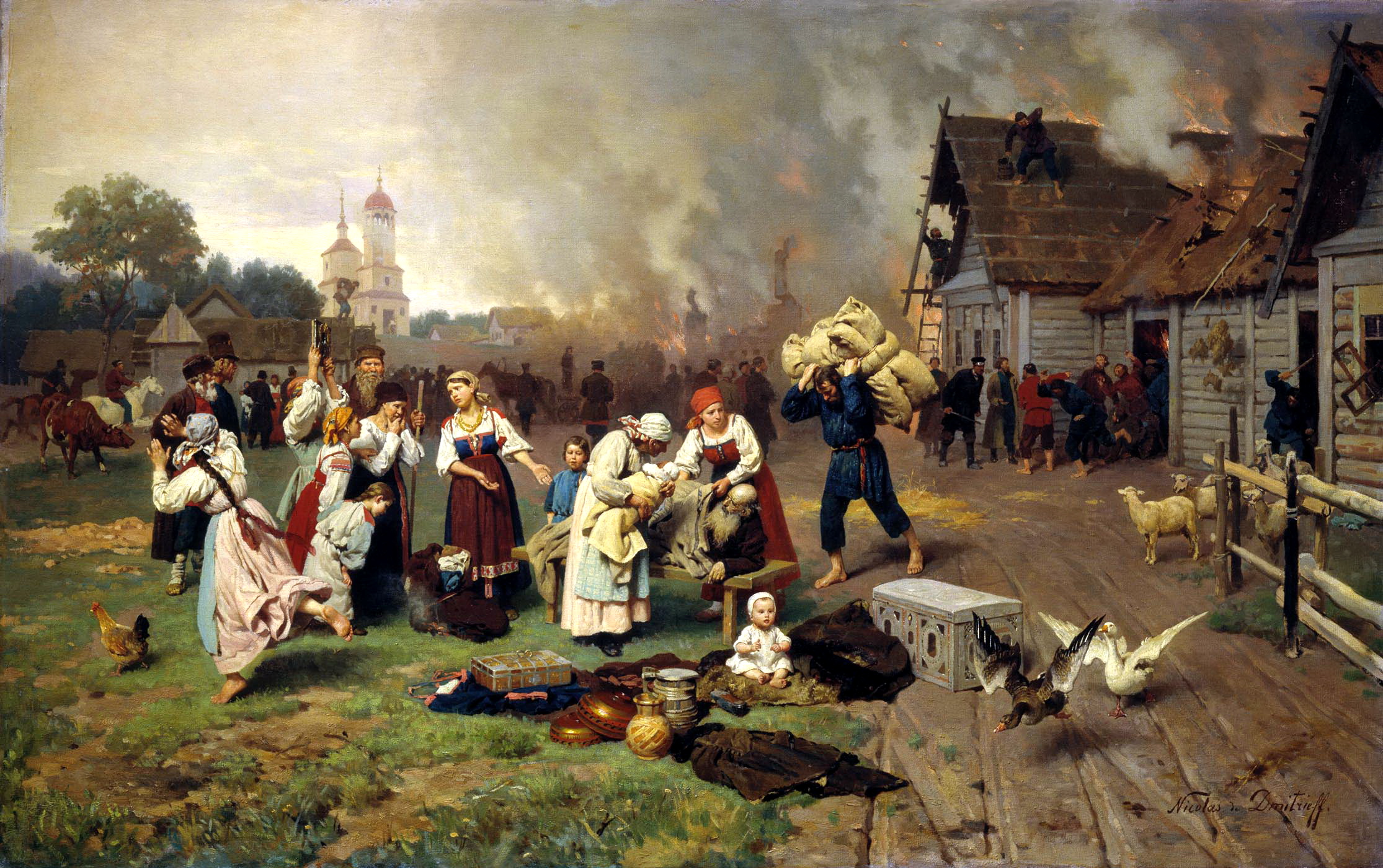
Peasant unrest was rife, though it rose and fell, until the very last days of the empire. And, according to the Ministry of Internal Affairs of the Russian Empire, fire was "one of the most characteristic features of daily life in Russia, and one of the most frequent manifestations of the struggle with nature" waged by peasants from time immemorial.
This "struggle with nature," explained tsarist officials, was to blame for "the slow pace of capital accumulation and the slow development of economic and civil life." And it was rooted in two simple facts: first, Russia was built of wood. Second, it was located on a vast plain that was subject to searing, drying summers, and dreadfully cold winters that necessitated the use of fire for survival.
In 1865 the Central Statistical Committee of the Ministry of Internal Affairs published a lengthy report on over 66,000 fires documented over a five-year period (1860-1864). In it they acknowledged what they called "temporary" factors such as peasant unrest (although peasant unrest was arguably a permanent element of the regime rather than a temporary one) but insisted that the phenomenon of fire be understood as the result of geographical and climatic forces.
The burning question is this: between 1842 and 1864, the number of fires taking place annually in the European part of the Russian Empire doubled. This trend was out of line with population growth, and there was no demonstrable decline in living standards. What do you make of the statisticians' claim that the rising flames in rural and urban areas should be attributed to better record keeping and a few geographical quirks?Want to get your hands on the data? Read about (and access) it here.