The Imperiia ProjectMain MenuResearch Dashboardsmaps, visualizations, and moreVeles: The Data CatalogOngoing ProjectsThe MapMaker PodcastEvery story starts somewhere.Teach with MapsGalleriesKelly O'Neilldc20b45f1d74122ba0d654d19961d826c5a557f5The Imperiia Project // Davis Center for Russian and Eurasian Studies, Harvard University
Our content isn't just a bunch of (arguably) pretty pictures. Our maps, galleries, games, and stories are designed to be used - in your research or in your classroom.
We want you to engage. Click. Zoom. Canvas Empire is not a textbook. It doesn't tell the story of the Russian Empire from beginning to end. Instead, it offers countless portals into that world. We want you to come to us when you are feeling curious or looking for something to pursue - when what you need is a solid research question.
This section contains ready-made assignments. You can dive right in or adapt them for your own purposes.
Do you (or your students) need to know Russian history? For the most part, no. The main goal here is to share something about how maps work as graphic devices, why they are important as historical sources, and how they can change the way we think about the world, both past and present.
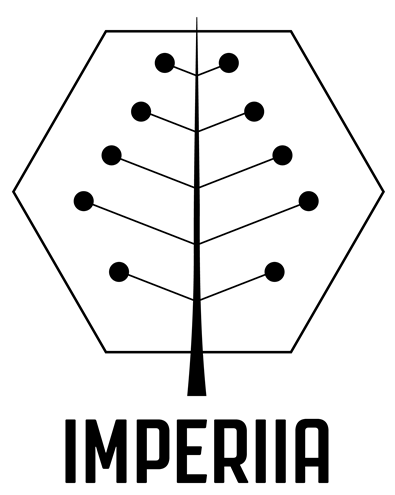
12024-04-22T13:11:37+00:00About our logo14structured_gallery2024-04-22T16:29:03+00:00Since its inception, the Imperiia Project has promoted the digital humanities by bringing together incisive historical research and the latest technological advancements in geographic information systems (GIS). The new logo reflects this mission by evoking the points and paths on a map in the shape of a leaf - at once a callback to the old logo of an oak leaf motif popular in Eastern European culture, and a reference to the environmentally focused work of Dr. Kelly O'Neill and her team.
The modern geometric design also highlights the digital core of the Imperiia Project, represented by the basic building blocks of GIS: points, lines, and polygons.
All elements together, then, beautifully capture the contributions of the project to spatial humanities, where history and geography intersect with nature and technology.