Village Fire
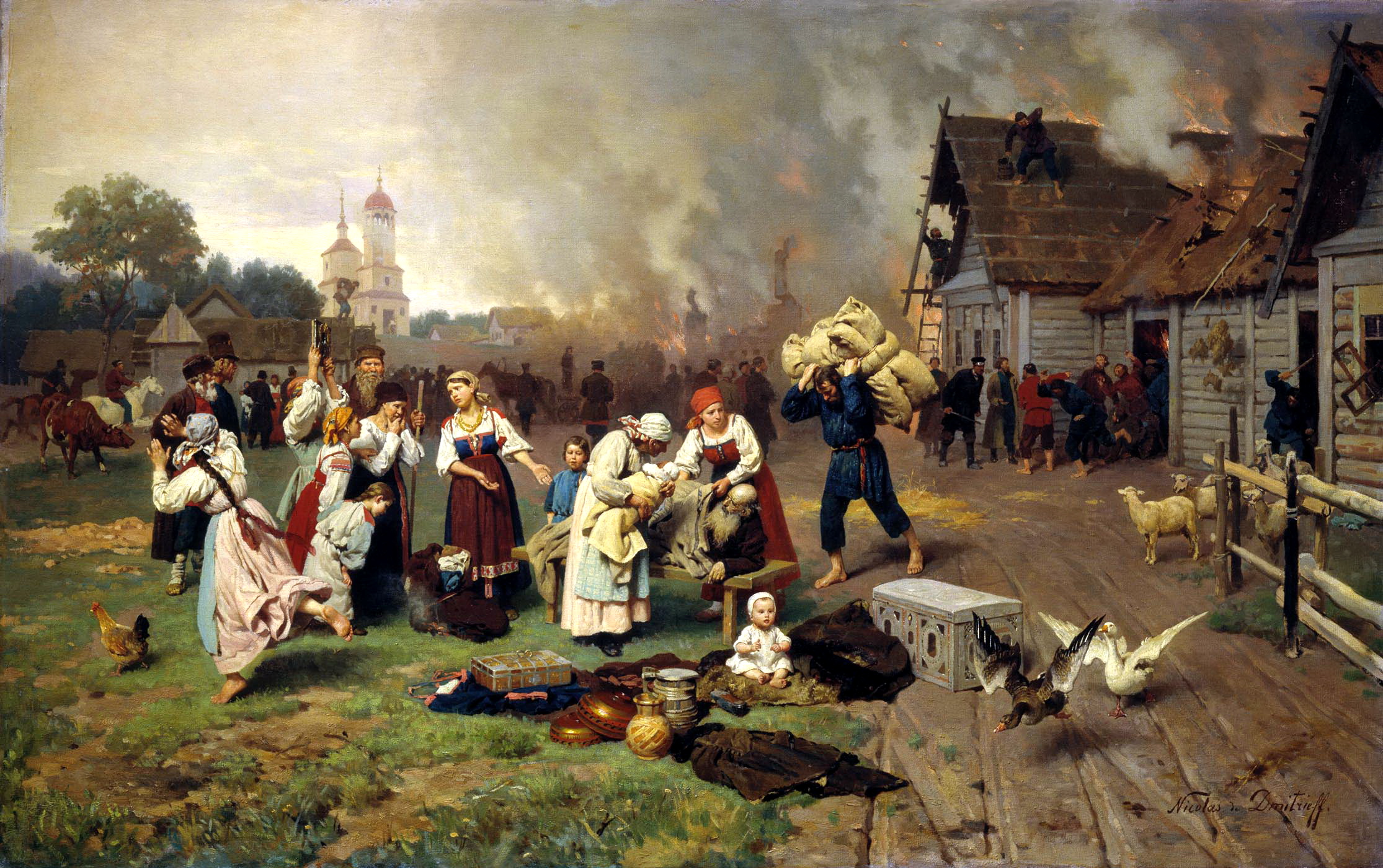
1 2024-03-04T11:38:28-05:00 Paul Vadan f46fd2a7a6d2ab1ecca0ec13c84118eaf61facfa 9 4 The Fire in the Village, painting by Nikolai Dmitriev-Orenburgsky, 1885; currently in the State Russian Museum plain 2024-03-05T11:14:01-05:00 Paul Vadan f46fd2a7a6d2ab1ecca0ec13c84118eaf61facfaThis page has annotations:
- 1 2024-03-04T16:20:33-05:00 Paul Vadan f46fd2a7a6d2ab1ecca0ec13c84118eaf61facfa An Eye for Detail Paul Vadan 9 plain 2024-03-05T10:41:51-05:00 Paul Vadan f46fd2a7a6d2ab1ecca0ec13c84118eaf61facfa
- 1 2024-03-04T16:06:32-05:00 Paul Vadan f46fd2a7a6d2ab1ecca0ec13c84118eaf61facfa Farmlands: Counting Sheep Paul Vadan 7 plain 2024-03-05T10:41:52-05:00 Paul Vadan f46fd2a7a6d2ab1ecca0ec13c84118eaf61facfa
This page is referenced by:
-
1
2024-02-29T10:34:33-05:00
Up in Flames
130
Mapping fire across European Russia in the 1860s
image_header
2026-01-14T16:29:52-05:00
03-01-2024
GET THE DATA
The 1860s were a volatile time in the Russian Empire.
In the wake of a catastrophic loss in the Crimean War and subsequent signing of the Treaty of Paris (1856), Tsar Alexander II and his government were forced to reckon with an array of forces threatening to pull apart the foundation of imperial society. The emancipation of the serfs (1861) was an event of world significance and certainly the single most important result of the great reckoning. But it was no panacea and marked the beginning of a decade of reform and reaction.
Peasant unrest was rife, rising and falling until the very last days of the empire. And throughout those years, as in centuries prior, it was intimately linked with fire. But the Ministry of Internal Affairs went to great lengths to define fire as an apolitical force. In 1865 the ministry's Central Statistical Committee published a lengthy report on over 66,000 fires documented over a five-year period (1860-1864). In it they acknowledged what they called "temporary" factors such as peasant confusion and anger (about the pace of emancipation and the goals of land redistribution policies) but insisted that the phenomenon of fire be understood as the result of geographical and climatic forces.
Fire, they wrote, was "one of the most characteristic features of daily life in Russia, and one of the most frequent manifestations of the struggle with nature" waged by peasants from time immemorial. This so-called struggle with nature, explained tsarist officials, was to blame for "the slow pace of capital accumulation and the slow development of economic and civil life." And it was rooted in two simple facts: Russia was 1) built of wood and 2) located on a vast plain that was subject to searing, drying summers, and dreadfully cold winters that necessitated the use of fire for survival.Fire was inescapable. It was everywhere.
In fact, maybe it's worth finding out which parts of the empire were burning, and when. Between 1842 and 1864, the number of fires taking place annually in the European part of the Russian Empire doubled. This trend was out of line with population growth, and there was no demonstrable decline in living standards. What do you make of the statisticians' claim that the rising flames in rural and urban areas should be attributed to better record keeping and a few geographical quirks?
But it wasn't everywhere all at once.Let's look at some maps. For starters, what does the 1865 report tell us about arson?
[Click here for the full screen view]
Most of the space of the Russian Empire at this time was rural. Farms owned by nobles and worked by peasants. In the 1860s, town lands made up, on average, less than 1% of the area of a district (uezd). In other words, they were a mere drop in the proverbial bucket. And yet the 1865 fire statistics pay just as much attention to them as to the countryside. There are lots of very good reasons for this, and we will leave it to you to work them out. But meanwhile, you might want to spend some time with these side-by-side comparison maps.
Next? A little comparative perspective.For a better viewing experience, open the full screen version.
Want to get your hands on the data? Read about (and access) it here.
Project Team
Davit Gasparyan; Thomas Schaffner; Paul Vădan; Kelly O'Neill
Care to cite this dashboard? O'Neill, Kelly and Vadan, Paul. "Up in Flames." Imperiia: A Spatial History of the Russian Empire. https://imperiia.scalar.fas.harvard.edu/imperiia/up-in-flames [date of access].
Launch Date: 1 March 2024 -
1
2024-03-04T16:11:42-05:00
Learn about the man who painted the town red
41
...and whose paintings ended up at the Chicago world fair in 1893
plain
2024-03-06T00:18:36-05:00
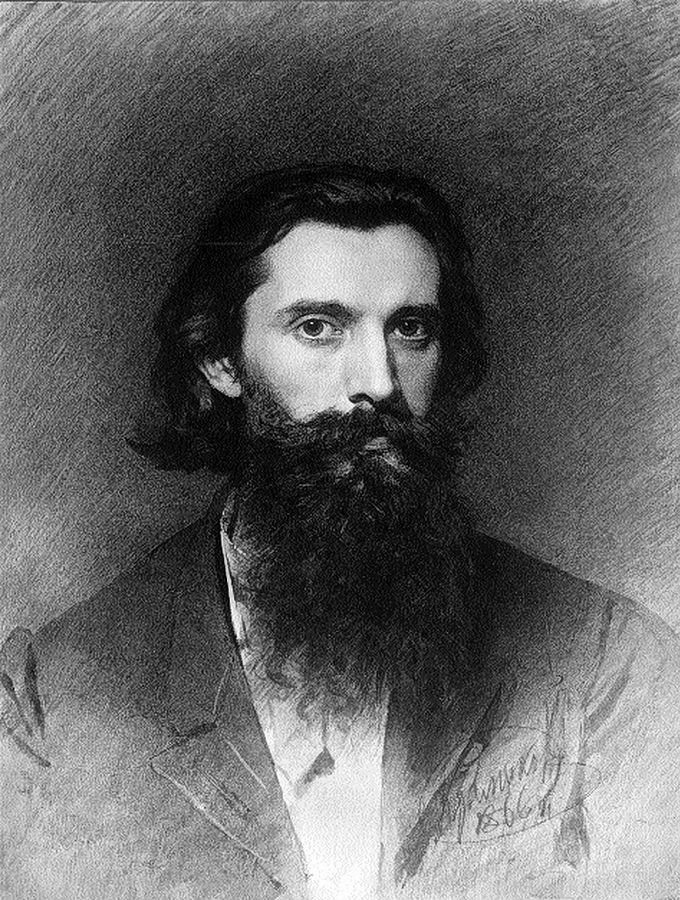
Nikolai Dmitriev-Orenburgsky, born in Nizhny Novgorod in 1837, was one of the students who decided in 1863 to leave the Imperial Academy of Arts as part of the Revolt of the Fourteen and form an independent artistic society. He later had a falling out with Ivan Kramskoi and left the "artel" that formed in the wake of the revolt.
From 1877 to 1884 he lived and worked in Paris, during which time he was commissioned by the Russian imperial family to paint scenes from the Russo-Romanian-Turkish War of 1877-1878. But besides the military themes that figured prominently in his work, he sought to draw public attention to the hardships of peasant life.
“Fire in the Village” explores a theme that became popular among Russian artists at the middle of the 19th century. In addition to the narrative element of peasants trying to escape the blazes and salvage whatever they could, the artist included ethnographic and historical details, including architectural elements, clothing, and wares.
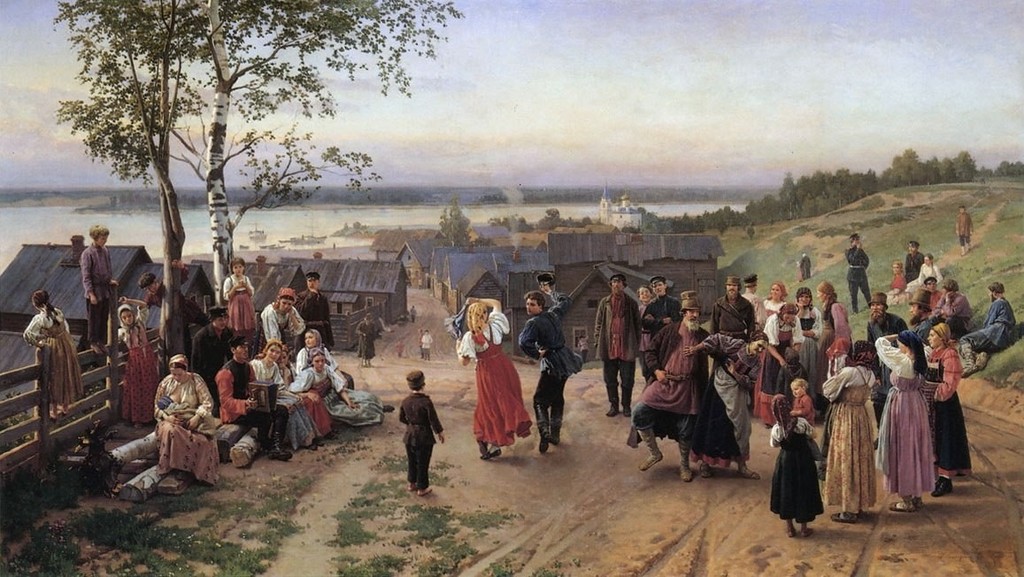
Some of Dmitriev-Orenburgsky’s village life paintings were exhibited at The World’s Columbian Exposition of 1893 in Hyde Park, Chicago, Illinois. According to his reviewers,A noticeable feature is the air of sadness depicted in scenes of Russian life, even in those which portray its more cheerful phases. Thus in "Sunday in a Village", by Dmitrieff-Orenbursky, where peasants are trying to make merry, we can see that they are only trying, and with indifferent success. [...] To stand before this canvas is to have very much the sensation of being set down in a Russian village on a Sunday afternoon.
The painter continued to have a distinguished career in Europe but always kept his motherland close to his heart. He traveled and worked in Germany, Belgium, and Bulgaria, and in 1883 was named Professor of Battle Painting by the Imperial Academy of Arts. He passed away in Moscow due to sarcoma on the 21st of April 1898 and is buried in the Smolensky Orthodox Cemetery in Saint Petersburg.