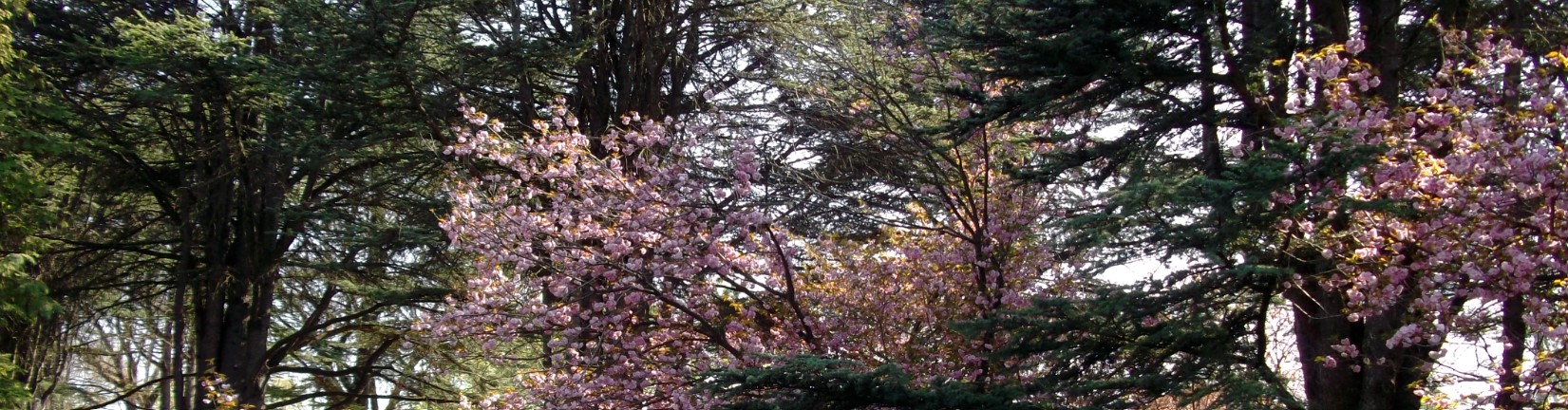
Botanical garden at the Tavrida National University in Simferopol
1 2022-06-28T16:00:08-04:00 Kelly O'Neill dc20b45f1d74122ba0d654d19961d826c5a557f5 9 1 photo by Eugene Badusev plain 2022-06-28T16:00:08-04:00 Kelly O'Neill dc20b45f1d74122ba0d654d19961d826c5a557f5This page is referenced by:
-
1
2022-06-27T12:37:39-04:00
Beautiful Spaces
29
Crimean history has a graphic dimension
plain
2022-07-03T11:41:01-04:00
[Note: site under construction, launch set September 1, 2022]
This is a history of Crimea, though it is not the kind of history you have likely encountered before. Rather than reconstructing political events or cultural developments, this project puts the idea of location front and center. It attempts to reconstruct the places of Crimea in the years after the first Russian annexation in April 1783. It explores the value of distance and proximity, density and diffusion, access and isolation, as tools of historical analysis. In so doing, it sheds light on the ways in which the built and natural environments shaped daily life in (arguably) the most beautiful corner of the tsarist empire.Why "Beautiful Spaces"?
It is hard to come up with a pair of concepts as evocative and as subjective as "beauty" and "space." Combine them, and you have a concept that seems, at first glance, to defy definition. Then again, combine them, and you have a concept which, on second thought, functions as a uniquely powerful tool for making sense of a historical terrain in which every square inch was continually claimed and contested, subject to ruin and reinvention.
In Crimea, topography and aesthetics were major themes in nearly every travel account composed between the middle of the eighteenth century and the turn of the twentieth. Government officials spent decades asking "where" questions, documenting locations, and creating new (administrative and cultural) spaces. Land was the medium through which Crimean Tatars and Greeks negotiated privileges (and obligations) from the imperial state. Lucrative, ideologically productive spaces - such as gardens and ruins - shaped the way Russian subjects conceptualized Crimea for more than a century.
In fact, we cannot understand Crimea without understanding what constituted beauty in this small corner of the empire. Beautiful Spaces argues that beauty in this part of the world was fickle. It could be associated in one breath with the majesty of cliffs rising from the Black Sea or the luxurious vineyards of the river valleys, and with the landscape of decrepitude and ruin in the next breath. In Crimea, beauty was complex and ephemeral, simple and timeless, visible and imagined.Project Components
Gardens of Crimea Dashboard (initial launch July 8, 2022)
Glossary, galleries, and maps of the orchards and vineyards of late eighteenth-century Crimea.
Dust and Bones (launch set September 1, 2022)
Glossary and maps of ruins and archaeological sites of early nineteenth-century Crimea.
Home (launch set September 1, 2022)
Data visualizations and maps of dacha properties granted to members of the imperial elite in 1802. -
1
2022-06-28T14:47:15-04:00
Gardens
15
Beautiful Spaces chapter
plain
2022-06-28T16:33:47-04:00
What if we could reconstruct the fabled gardens of Crimea as they were at the turn of the 19th century?
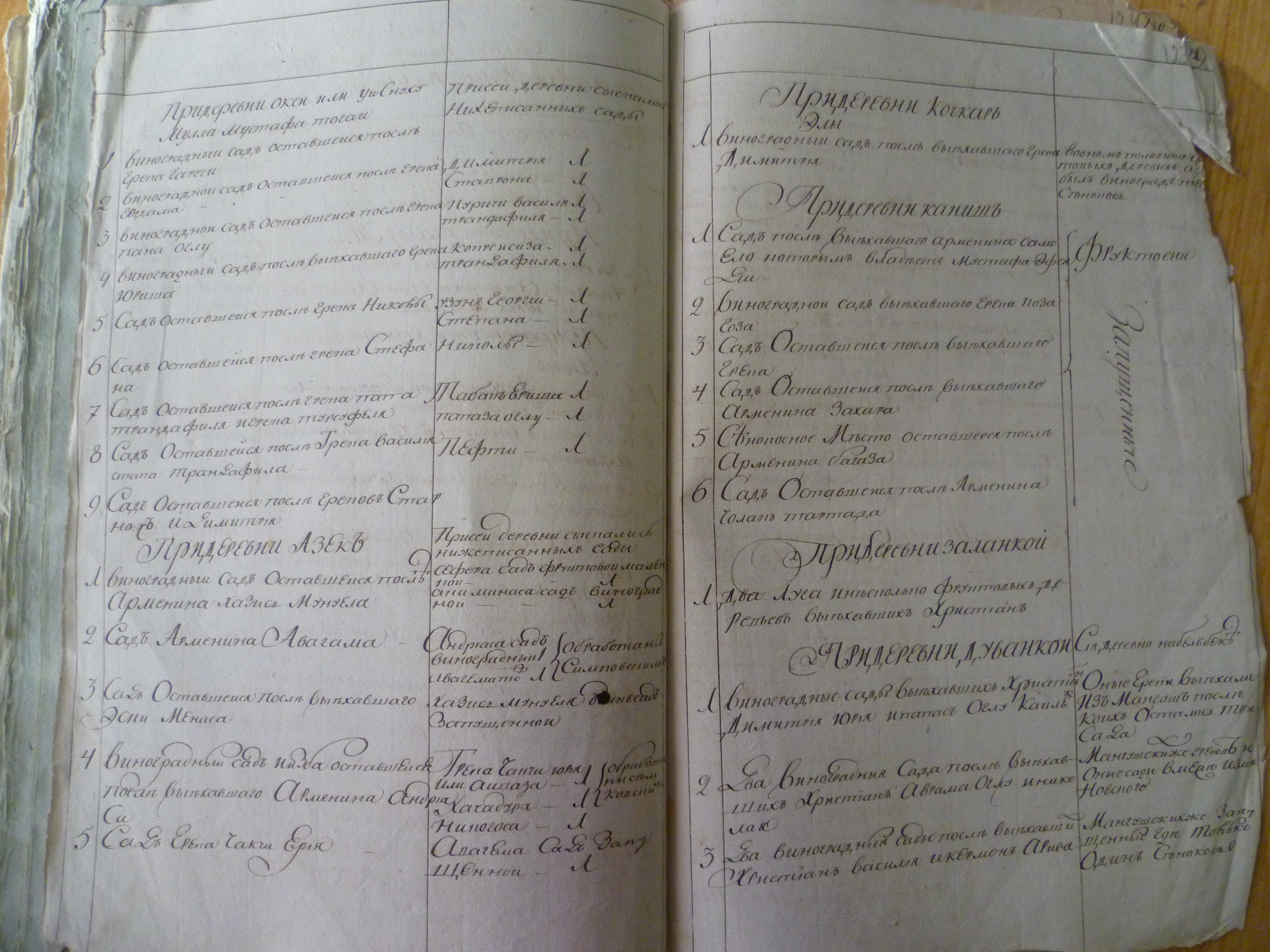
Sometimes, the historical record allows us to attempt the impossible. Ten years after the (first) annexation of Crimea by Russia, imperial officials undertook a survey of the most valuable properties in the newly-acquired territory: its gardens. To be more precise, the survey focused on the orchards and vineyards abandoned by their owners (Crimean Tatars and Greeks) and claimed as state property after 1783. The work was carried out between 1791 and 1793 and by the time it was complete, officials had compiled reports describing 809 orchards, 332 vineyards, 19,667 trees, and almost a quarter million grapevines. The registers provide glimpses of gardens that have long since ceased to exist. They allow us to imagine the cycles of sunlight and shade, the aromas, the varying levels of wildness and cultivation. At first glance we see a landscape of plum and hazelnut, walnut and pear. There are peaches and cherries, medlars and quince, and even a rogue almond. It seems beautiful. Lush. We aren't surprised that a traveler writing in 1815 waxed poetic about the figs and cypresses of Alupka, and "everywhere wonderful rose bushes, lavender, jasmine and lilies, such that I thought I was in Italy."
But there are many ways to read a garden.
Piles of rotting fruit amass in autumn as surely as the sweet-blooming flowers cluster in spring. Trees fall victim to pest and drought and old age. Winds blow, axes fall. Those stories remain buried; beyond our view. Instead, the 1793 registers tell stories of abandonment and loss. How can that be? The answer is scrawled in the manuscript tables that document gardens whose owners fled Crimea between 1778 and 1791. Greek owners emigrated in 1778 in response to Catherine II's invitation to resettled in Russian territory near Mariupol. Tatar owners emigrated after Catherine annexed the Crimean Khanate in 1783. Their orchards and vineyards remained behind and must be read as spaces of ruin as well as nodes of productivity.Consult the Glorious (Tree) Glossary